
Sarcomyxa edulis
Sarcomyxa edulis (Y.C. Dai, Niemelä & G.F. Qin) T. Saito, Tonouchi & T. Harada
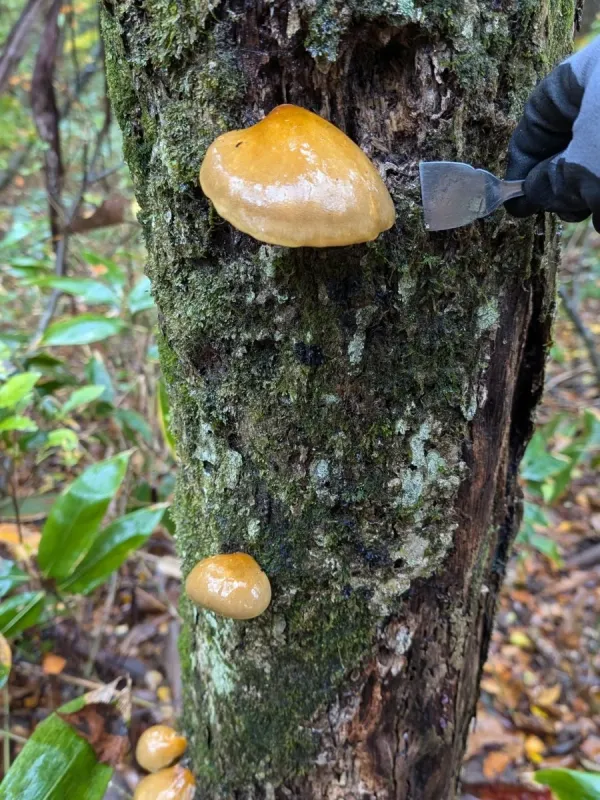
Description
Sowing dates
Sarcomyxa edulis is a wood-decaying fungus that requires specific substrate preparation, typically involving sterilized sawdust enriched with bran.
The cultivation process begins with the inoculation of prepared substrate blocks with pure culture mycelium under strictly sterile laboratory conditions.
Incubation requires a dark environment with a steady temperature range of 20–24 degrees Celsius to facilitate rapid mycelial colonization.
The colonization phase generally lasts for three to four weeks, during which the substrate must remain protected from external contaminants.
Once the substrate is fully colonized, the blocks are transferred to a fruiting chamber where environmental parameters are adjusted to trigger primordia formation.
Growing requirements
Successful fruiting of Sarcomyxa edulis requires a controlled temperature range between 15 and 18 degrees Celsius.
Maintaining a high relative humidity of 85–90% is essential to prevent the delicate primordia from drying out and aborting.
Adequate ventilation is critical to manage CO2 levels; while high levels are tolerated during incubation, fresh air exchange is mandatory during fruiting.
Exposure to low-intensity light, approximately 500 lux, is necessary to ensure the proper development and orientation of the mushroom caps.
Substrate pH balance should be maintained between 5.5 and 6.5 to promote mycelial health and prevent colonization by aggressive molds.
Yield
Production efficiency for this species is highly dependent on the quality of the substrate mixture and the specific strain characteristics.
Standard cultivation practices can yield between 15% and 25% of the total substrate weight in fresh mushrooms over multiple harvesting flushes.
The first flush typically provides the highest quality mushrooms with the most uniform size and texture.
Professional growers optimize yields by precisely timing the transition from the incubation phase to the fruiting phase based on mycelial density.
Post-harvest weight loss is minimized through controlled environment storage, ensuring better marketability of the product.
Main diseases and pests
The most common biological threats include green mold (Trichoderma), which thrives in nutrient-rich and moist substrate environments.
Fungal gnats and mites represent significant pests that can feed on mycelium and damage the integrity of developing mushrooms.
Bacterial blotch is a common issue caused by poor moisture management and improper ventilation during the fruiting cycle.
Sanitary protocols within the growing facility are the primary defense against recurring contamination and pathogen outbreaks.
Heat treatment of the substrate at temperatures above 65 degrees Celsius remains the most effective method to neutralize potential contaminants.
Harvesting
Harvesting should occur just before the caps fully expand, ensuring optimal texture and shelf life for the harvested product.
The mushrooms are harvested manually, ensuring they are cut or twisted cleanly from the substrate to allow for subsequent flushes.
Harvested crops should be chilled immediately at 2–4 degrees Celsius to maintain the fresh quality required for commercial retail.
After each harvesting round, the substrate surface should be cleaned of any debris to prevent rot and encourage the next set of fruiting bodies.
Efficient harvesting cycles are essential to maintain the profitability of the operation and ensure a constant supply of mushrooms.