
Salsola portilloi
Salsola portilloi
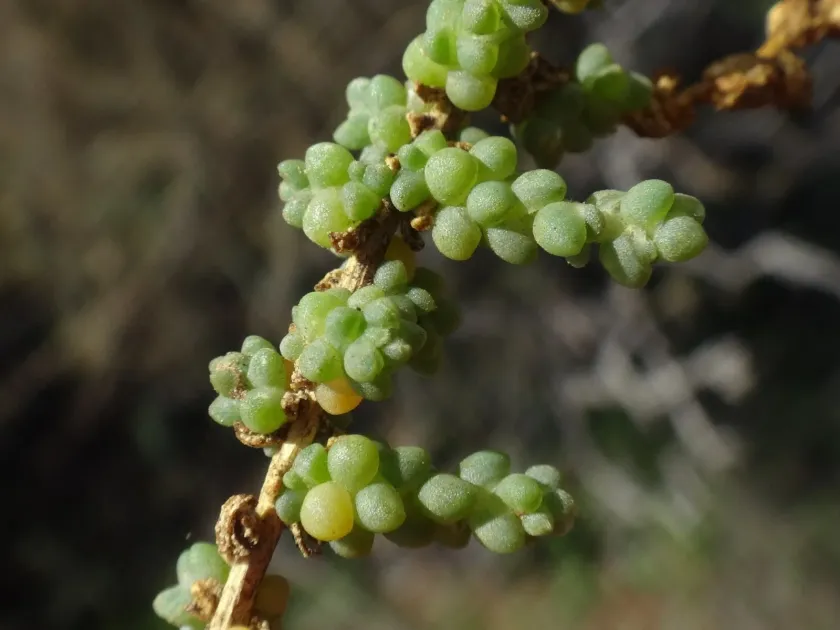
Description
Sowing dates
Sowing of Salsola portilloi is carried out in the spring when the soil temperature reaches 10–12°C, ensuring a stable moisture level for seed germination.
The sowing depth should not exceed 1–2 centimeters, as the seeds have limited energy reserves to sprout through a thick layer of soil.
Row spacing in commercial production typically ranges from 45 to 60 centimeters, providing the plant with sufficient space for root system development.
It is recommended to sow during morning or evening hours in calm weather conditions to ensure even distribution of seeds across the field.
Establishing a fine-grained soil structure before planting is a critical factor for achieving high field emergence rates for this crop.
Growing requirements
Salsola portilloi belongs to the Amaranthaceae family and acts as a halophyte, making it ideal for developing saline lands unsuitable for other crops.
The plant demonstrates exceptional tolerance to high salt concentrations in the soil solution, actively accumulating minerals within its above-ground biomass.
The crop prefers sunny locations and reacts negatively to shading, which can cause stem stretching and reduce the overall quality of the yield.
While the crop is not demanding regarding soil texture, it performs best in loose sandy loam or loam substrates with good drainage capabilities.
The optimal soil pH level for cultivating this species is in the slightly alkaline range, which is typical for the saline soils of its natural habitat.
Yield
The yield of green biomass for Salsola portilloi depends heavily on irrigation intensity and the overall management level of the farming operation.
By maintaining optimal plant density, growers can achieve up to 15–20 tons of raw biomass per hectare per growing season.
Moderate application of nitrogen fertilizers significantly increases the protein content in the forage mass, enhancing the economic value of the crop.
The plant possesses a high capacity for rapid regrowth after harvesting, allowing for multiple cuts during the growing season if irrigation is timely.
Yield stability is largely dependent on the plant's ability to store water in its tissues, allowing it to maintain productivity even under drought conditions.
Main diseases and pests
Salsola portilloi possesses high natural resistance to most common agricultural pests due to the specific chemical composition of its tissues.
However, during early growth stages, the crop may be susceptible to seed-corn maggots, especially if crop rotation is neglected and soil moisture is high.
Root rot may occur due to water stagnation, so it is vital to monitor the field's drainage capacity and prevent excessive soil moisture levels.
Weeds pose a serious threat only in the first month after germination; afterward, the crop effectively suppresses competitors with its dense biomass.
In regions with high concentrations of phytophagous insects, preventive insecticide application may be required, although the crop is generally self-sufficient.
Harvesting
Harvesting should be performed during the active growth phase, before the stems begin to lignify, to preserve the maximum nutritional value of the biomass.
For forage production, mowing is performed using standard forage harvesters adjusted to the appropriate cutting height for the crop stand.
If seeds are intended for collection, harvesting is delayed until the seeds reach full maturity and acquire their characteristic color.
Post-harvest handling includes drying the green mass in well-ventilated areas to prevent spoilage and the development of mold in the product.
Transportation of the harvested material must be prompt, as the succulent tissues are prone to rapid self-heating if stored incorrectly for extended periods.