
Salsola oppositifolia
Salsola oppositifolia
Description
Growing requirements
Salsola oppositifolia is a perennial semi-shrub belonging to the Amaranthaceae family. Naturally distributed across Mediterranean and North African arid zones, it serves as a robust specimen for saline ecosystems where typical crops fail.
As a specialized halophyte, the plant thrives in high-salinity soils, utilizing its physiological mechanisms to sequester salts within its succulent tissues. This trait is essential for its survival and dominance in high-stress saline environments.
The climatic requirements include high solar radiation and low precipitation levels. The plant performs best in sandy or silty soils where drainage is sufficient to prevent hypoxic root conditions, despite its inherent tolerance to low nutrient content.
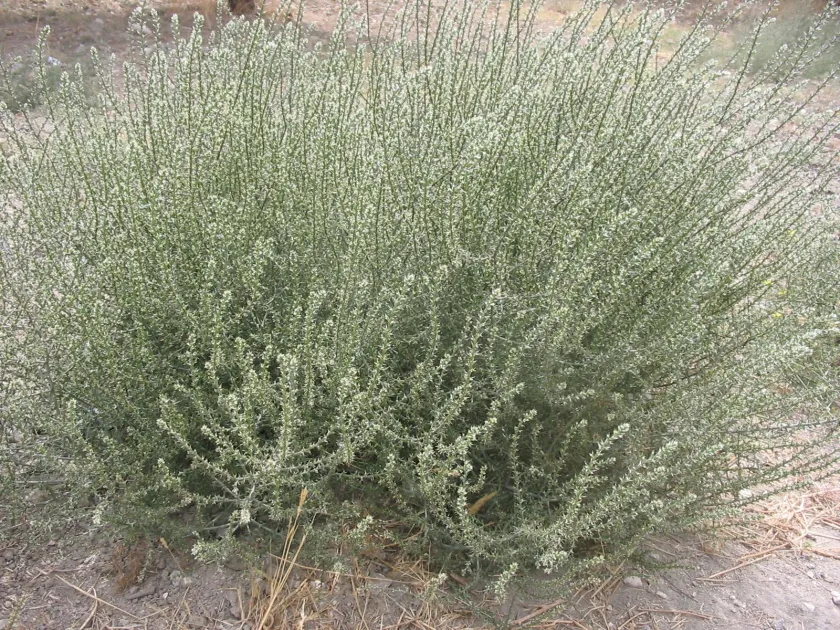
Morphologically, the plant is characterized by its distinct opposite leaf arrangement along the stems. Its small flowers form spike-like inflorescences, and its overall structure is optimized for moisture retention in intense heat.
From an agricultural perspective, it is increasingly valued as a forage crop in marginal desert lands. Additionally, it is used in sustainable land management for the biological remediation of overly salted agricultural soils.
Main diseases and pests
Salsola oppositifolia exhibits high resistance to common agricultural pathogens due to the elevated salinity levels in its plant tissues which naturally inhibit fungal colonization.
Insect pests are generally host-specific and rarely cause significant economic damage to large-scale stands, as they have co-evolved with this halophytic species.
The primary threat remains poor soil management, specifically regarding irrigation methods that may lead to soil compaction or excessive waterlogging in non-adapted areas.
Effective management includes careful site selection to avoid areas with high disease pressure from neighboring non-halophytic crops.
Standard agronomic monitoring involves observing leaf color and stem integrity, ensuring that the salt balance remains optimal for vegetative growth throughout the season.