
Salsola genistoides
Salsola genistoides
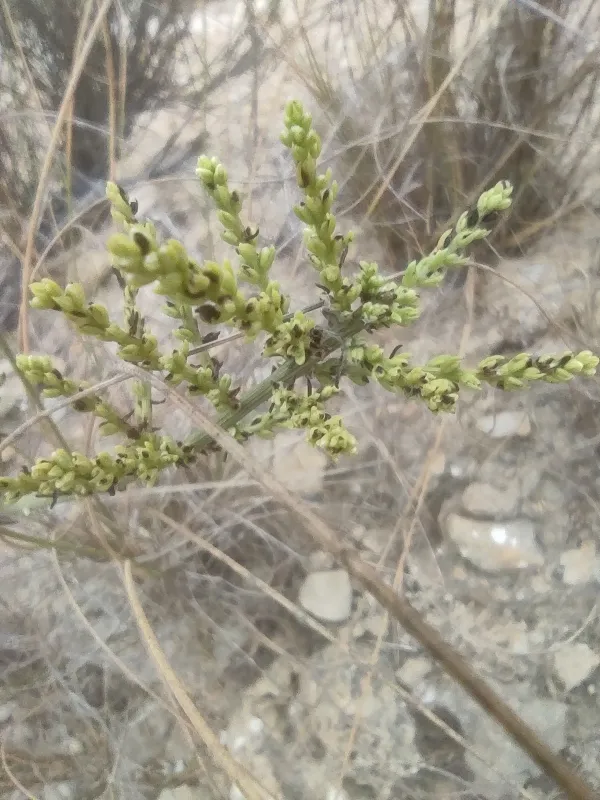
Description
Sowing dates
Sowing Salsola genistoides is typically conducted in the spring season when soil temperatures reach a consistent range of 12-15 degrees Celsius. This timing ensures that the seeds benefit from the residual soil moisture from the winter period, which is crucial for successful germination in arid environments.
Prior to sowing, the soil must be prepared through shallow tillage to create a fine, uniform seedbed. Due to the small size of the seeds, they should be sown at a shallow depth to ensure they are not buried too deeply, which could hinder their ability to emerge effectively.
Seed spacing is adjusted based on the intended purpose of the crop, whether it is for biomass production or seed propagation. Utilizing precision seed drills ensures uniform distribution, which optimizes the utilization of resources and simplifies mechanical maintenance during the growing cycle.
Post-sowing management includes close monitoring of soil moisture during the first few weeks of development. If rainfall is insufficient, light supplementary irrigation may be necessary to support the establishment of the root system, particularly in the initial developmental stages.
Consistent row spacing not only aids in crop management but also facilitates the use of mechanical implements for weed control between rows during the early stages of vegetation before the crop canopy closes.
Growing requirements
Salsola genistoides, a member of the Amaranthaceae family, is a highly adapted halophyte capable of thriving in soils with high salinity levels. Its physiological mechanisms allow it to accumulate and tolerate salt concentrations that would be toxic to most conventional crops.
The crop prefers well-drained, light-textured soils such as sandy or loamy sands, as these environments provide the necessary oxygen for its root system. Poor drainage and waterlogged conditions are highly detrimental to the growth and productivity of this species.
Climate requirements for this plant are centered on its high tolerance for heat, intense solar radiation, and prolonged drought. It is an obligate heliophyte, meaning it requires full sun exposure to maximize its biomass accumulation and metabolic efficiency.
The optimal pH range for this crop is slightly alkaline, which matches the natural habitat conditions of saline and semi-arid regions. It is highly resilient to variations in environmental conditions, making it an excellent choice for stabilizing degraded saline landscapes.
Temperature tolerance is broad, with the best growth observed in the 20-30 degree Celsius range. The plant exhibits dormant or slow-growth phases during cooler periods, which allows it to survive seasonal temperature fluctuations effectively.
Yield
The biomass yield of Salsola genistoides is heavily influenced by moisture availability during the peak vegetative phase. While it is adapted to dry conditions, supplemental moisture during its rapid growth stage can significantly increase the total yield per hectare.
In terms of agricultural utility, this species provides a reliable source of green forage in regions where traditional crops fail. Its ability to regrow after moderate grazing makes it a sustainable option for integrated livestock management in saline zones.
The nutritional value of the plant is bolstered by its mineral content, which is particularly beneficial for ruminants. Proper management, including timely harvest, ensures that the protein and nutrient content of the forage is preserved for livestock consumption.
Seed yield is an important parameter for commercial operations, as the species relies on efficient propagation for population maintenance. Selective breeding programs are increasingly focusing on standardizing the maturity phase of the seeds to improve harvesting efficiency.
Economic viability is largely driven by low input requirements. Because Salsola genistoides is inherently resistant to many biotic stresses, the cost of fertilizers and chemical protectants is significantly lower compared to traditional grain or forage crops.
Main diseases and pests
The primary biotic threats to Salsola genistoides include specialized insect pests that have adapted to feed on halophytic tissues. These pests can damage leaves and stems, potentially reducing the overall vigour and reproductive output of the plants.
Fungal infections, often occurring during periods of unseasonable high humidity, can lead to localized rot. To mitigate this risk, it is essential to ensure adequate plant spacing and ventilation within the field to prevent the buildup of micro-environmental moisture.
Rodents represent another threat, particularly in desert or semi-desert environments where the succulent stems of the plant provide a vital food source. Integrated pest management strategies, such as physical barriers or field monitoring, are recommended.
Weed competition is generally a concern only during the early seedling stage. Once the plants are established, their vigorous growth and salt-tolerant nature often allow them to outcompete most common agricultural weeds in saline environments.
Chemical intervention should be used sparingly and only as a last resort. Emphasis is placed on cultural practices, such as crop rotation and the timing of cultivation, to maintain a balanced and healthy ecosystem for the crop.
Harvesting
Harvesting for green forage is best carried out during the budding to early flowering stage. This timing captures the optimal balance between the total biomass yield and the concentration of vital nutrients within the plant tissues.
Techniques for processing the forage include wilting, baling, or ensiling. Given the plant's natural adaptation to dry climates, the wilting process is relatively rapid, allowing for the quick preservation of quality biomass for future livestock feed.
Seed harvest is conducted once the seeds have reached physiological maturity, characterized by a change in color and increased density. Modern harvesting machinery is adapted to ensure that the collection of seeds is efficient, minimizing losses during the cutting process.
Post-harvest residues, due to their unique mineral composition, should be incorporated back into the soil as organic matter or properly processed for use as a biofuel. This approach supports circular agricultural practices within the local ecosystem.
Effective harvest management requires strategic planning based on seasonal weather patterns. A swift and well-timed harvest ensures the highest quality of the final product, ultimately enhancing the profitability of the agricultural venture.