
Salsola acutifolia
Salsola acutifolia
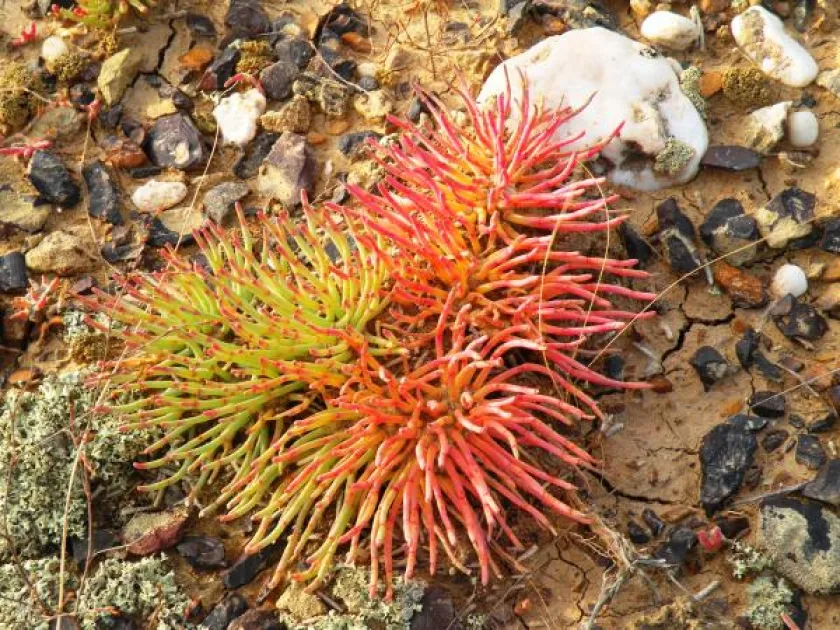
Description
Sowing dates
Sowing of Salsola acutifolia is typically scheduled for early spring, allowing the seeds to take advantage of the moisture stored in the soil from the winter season. This ensures successful germination and the establishment of seedlings.
Soil preparation involves deep tilling or loosening to improve oxygen levels and facilitate root penetration. Seeds are generally sown at a shallow depth, usually not exceeding 1-2 centimeters, to promote rapid emergence.
Seeding rates must be calibrated based on local soil salinity levels and germination percentages. Careful distribution is crucial, as overcrowding can lead to nutrient competition and a weaker plant stand.
Light harrowing after sowing is recommended to ensure adequate seed-to-soil contact. In very arid conditions, managing the surface crust is vital, as the crust can act as a physical barrier preventing the sprouts from breaking through.
Weed management is essential during the early stages of plant development. Eliminating competitors ensures that the young plants receive sufficient access to available nutrients and space, establishing a dense and healthy crop.
Growing requirements
Salsola acutifolia is a perennial subshrub belonging to the Amaranthaceae family, highly specialized for growth in saline and arid environments. As a halophyte, it possesses unique physiological adaptations to survive in harsh desert and semi-desert climates.
The plant features a complex, deep-rooting system, which allows it to access groundwater at significant depths. Its physical structure, characterized by fleshy and somewhat blunt leaves, serves as an efficient water storage mechanism, making it highly drought-resistant.
Optimal development of this species requires abundant sunlight and excellent soil aeration. It thrives in high-temperature environments that would inhibit the growth of standard agricultural crops, making it a valuable resource for desert restoration.
Soil requirements for Salsola acutifolia include saline, alkaline, and sandy soils. The plant is sensitive to waterlogging, as excessive soil moisture can lead to root system decay and significantly reduce the plant's overall health and vitality.
Economically, this plant is highly valued as a hardy forage crop for camels, sheep, and goats. Its nutritional value remains stable during the autumn and winter months, providing a vital food source when other vegetation is scarce.
Yield
The yield of Salsola acutifolia is largely dependent on annual rainfall and the severity of soil salinity. The species shows impressive stability, producing consistent biomass even during periods of extreme moisture stress.
Average productivity in pasture settings ranges from 2 to 5 centners of dry matter per hectare. When managed with sustainable grazing practices, the yield remains stable over many years, proving its utility as a reliable forage source.
A key aspect of its yield is the nutritional retention of the dry biomass. Unlike other desert plants that shed leaves quickly, this species keeps its nutritional quality throughout the winter, providing a consistent supply of fodder.
To maximize yields, it is necessary to implement rotational grazing. Allowing the plant sufficient recovery time between grazing cycles is critical for stimulating new growth and preventing long-term stand degradation.
The plant also plays a significant role in soil reclamation. By providing dense ground cover and organic matter, it helps reduce wind erosion and improves soil quality in degraded territories over multiple growing seasons.
Main diseases and pests
Primary threats to Salsola acutifolia include various insect pests that feed on its leaves and succulent stems. Infestations can lead to significant biomass reduction, especially in years with unusual weather patterns.
Fungal diseases are a concern, particularly under conditions of high humidity or poor drainage. Excessive moisture can promote stem rot, which degrades the quality of the forage and impacts overall plant vigor.
Competition from other xerophytic plant species can be a major challenge if the crop stand is not properly managed. Invasive weeds can outcompete Salsola if the soil health is compromised or if grazing pressure is poorly controlled.
Mechanical damage from livestock trampling is a frequent cause of stand thinning. Compacted soil around the plant’s root zone limits aeration and can predispose the plant to secondary pathogenic attacks.
A proactive monitoring approach is the most effective defense. Regular assessments of the pasture allow for timely interventions, such as adjusting grazing intensity or implementing specific soil management practices to limit the spread of pests.
Harvesting
Grazing is the primary and most economical method of harvesting Salsola acutifolia. Allowing livestock to feed directly on the plants minimizes labor costs and reduces the need for heavy harvesting machinery.
For the production of hay, harvesting should occur at the onset of the flowering stage. At this point, the plant contains the highest concentration of protein and essential micronutrients, ensuring superior feed quality.
Drying the harvested material is a simple process due to the arid environment, but it must be done thoroughly to prevent mold development during storage. Proper storage facilities are essential to keep the forage dry and palatable.
Seed collection requires attention to detail, as maturation can be uneven across the population. Harvesting should be timed for when the majority of seeds are fully ripened to ensure high viability for the next sowing cycle.
Sustainable harvesting techniques, which include leaving enough plant tissue for natural regeneration, are fundamental to the longevity of the forage stand and the long-term success of the farming system.