
Salpiglossis sinuata
Salpiglossis sinuata Ruiz & Pav.
Description
Sowing dates
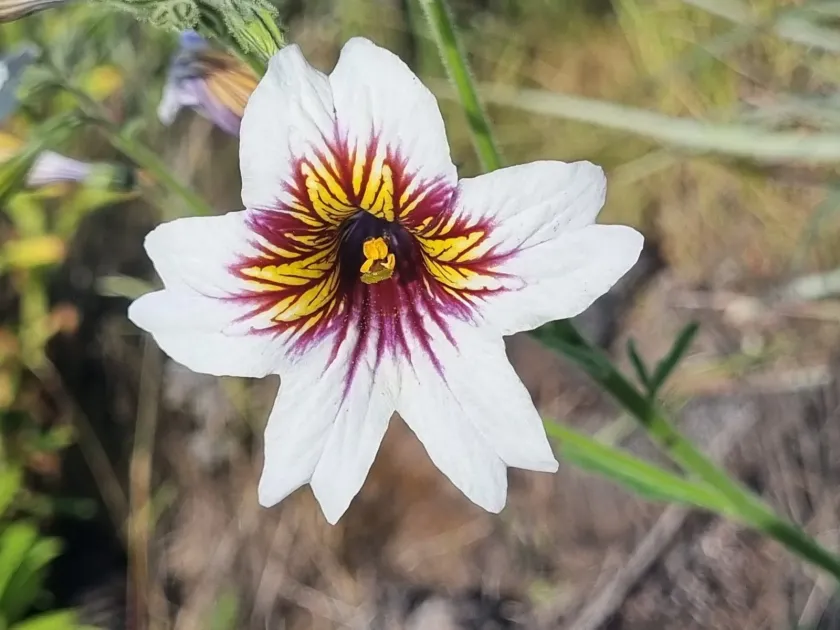
Salpiglossis sinuata, commonly known as the painted tongue, is a member of the Solanaceae family. Native to Chile, this tender annual is highly valued for its striking, trumpet-shaped flowers.
Seeds are typically started indoors 6 to 8 weeks before the last frost. They require light to germinate, so they should be sown on the surface of a fine seed-starting mix.
Seedlings are sensitive to root disturbance, so using biodegradable pots for sowing is recommended. This minimizes transplant shock when moving them into the garden.
Outdoor planting should occur only when the risk of frost has passed. Plants should be spaced about 25 centimeters apart to ensure adequate airflow and root development.
In regions with cool summers, this plant thrives, but in hotter climates, it benefits from light afternoon shade to prevent the foliage from wilting.
Growing requirements
Full sun is essential for optimal flowering. While the plant can tolerate partial shade, it will produce fewer blooms and tend to lean towards the light source.
The soil should be fertile, well-draining, and rich in organic matter. Sandy or loamy soils are ideal for maintaining the necessary moisture without waterlogging the roots.
Consistent moisture is key; the soil should never dry out completely during the growing season. Drip irrigation or careful watering at the base is preferred.
Feeding the plants with a balanced liquid fertilizer every two weeks supports sustained flowering. Avoid excessive nitrogen, which promotes lush leaves at the expense of blooms.
Staking may be necessary for taller varieties, as the stems are naturally delicate and can easily bend or break under heavy rain or strong wind conditions.
Main diseases and pests
Aphids are the most common pests affecting this plant. They tend to cluster on tender new growth, causing leaf curling and potentially spreading viral diseases.
Root rot is a significant risk, especially in heavy soils or during seasons with excessive rainfall. Improving drainage is the best way to prevent this issue.
Powdery mildew may appear on the leaves during periods of high humidity and poor air circulation. Proper spacing between plants helps mitigate this risk.
Slugs and snails can also damage young seedlings in the early stages of growth, requiring vigilance or the use of physical barriers around the planting site.
To keep the garden healthy, promptly remove any plants showing signs of severe disease to prevent the infection from spreading to adjacent specimens.