
Salpichroa origanifolia
Salpichroa origanifolia (Lam.) Thell.
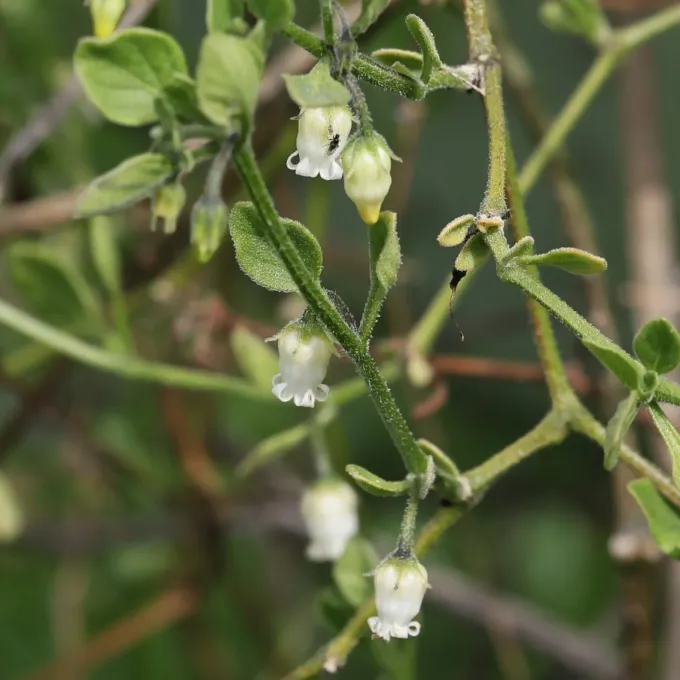
Description
Sowing dates
Propagation of Salpichroa origanifolia occurs primarily through a vigorous network of rhizomes, which allows the culture to spread rapidly during the spring season.
Seeds mature towards the end of summer, but the main method of colonizing new areas remains the underground rhizomatous system, which shows high viability.
When cultivating or managing the plant, it is important to realize that cutting the aerial part does not stop development because dormant buds continue to grow underground.
Optimal timing for initiating control or controlled planting falls within the period when soil temperatures reach 12-15 degrees Celsius.
Seeds require stratification to improve germination rates, so direct seeding is best performed in autumn or following cold treatment in the spring.
Growing requirements
Salpichroa origanifolia belongs to the Solanaceae family and demonstrates significant adaptability to various soil types in temperate climates.
The plant prefers well-drained, loose substrates but can successfully develop even in compacted clay soils due to its strong root system.
Normal development requires moderate warmth and access to sunlight, although the plant tolerates partial shading during the growing season.
Moisture is a critical factor: the plant responds well to regular watering but also maintains considerable resilience to short-term drought periods.
Adaptation traits: the plant is known to be highly aggressive towards neighboring species due to its rapid underground vegetative spread.
Main diseases and pests
As a member of the Solanaceae family, Salpichroa origanifolia is susceptible to common diseases like late blight, alternaria, and various types of root rot.
Primary pests attacking the foliage include the Colorado potato beetle, aphids, and spider mites, which require regular phytosanitary monitoring.
Under high humidity conditions, there is a risk of powdery mildew development, which can significantly reduce the overall vegetative productivity of the plant.
Root systems are frequently targets for soil nematodes, which, when present in large numbers, inhibit the growth and development of aerial shoots.
Chemical control is complicated by the durability of the rhizomes, making integrated biological and mechanical management strategies the most effective.
Harvesting
Harvesting is usually performed during the flowering phase when the concentration of beneficial compounds in the stems is at its maximum.
Given the invasive nature of the species, it is essential to remove rhizomes during harvesting to prevent uncontrolled spread across the field.
Mowing the green mass is typically done mechanically, but deep soil cultivation is required to ensure the plant does not regenerate from roots.
For seed collection, the harvest should be conducted in dry weather, waiting for the fruits to fully mature and darken.
Collected material requires immediate processing or proper drying, as the succulent stems are prone to rapid decay if stored in dense piles.