
Salicornia senegalensis
Salicornia senegalensis
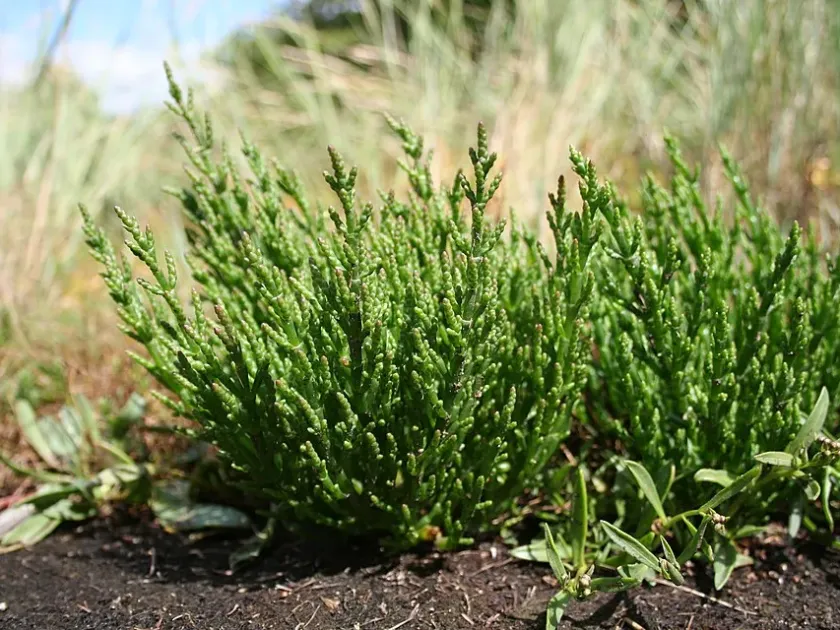
Description
Sowing dates
Salicornia senegalensis, belonging to the Amaranthaceae family, is a highly specialized halophyte capable of thriving in extreme saline conditions.
The optimal sowing period begins when soil temperatures consistently reach 15–18 degrees Celsius, ensuring rapid germination.
Direct seeding into prepared furrows in saline soils is the most common practice, ensuring seeds have contact with moist soil layers.
Initial irrigation is critical during the first few weeks of plant development, even though the species is highly salt-tolerant once established.
Seed depth should be kept shallow, as small seeds require minimal cover to emerge successfully without exhausting their energy reserves.
Growing requirements
The crop requires full sun exposure and performs best in open areas where there is no canopy cover or shading from neighboring vegetation.
Soil requirements are unique, as the plant demands high salinity levels that would be toxic to the vast majority of conventional crops.
It adapts well to sandy or silty coastal soils provided there is regular inundation or irrigation with brackish or saline water.
Maintaining a warm climate is essential, as the plant is susceptible to frost and requires a long growing season for maximum biomass production.
Management of water salinity levels is a key agronomic factor that can influence both the growth rate and the mineral composition of the plant.
Yield
Biomass yield is directly correlated with the frequency of saline irrigation and the specific nitrogen levels maintained in the soil.
The plant produces significant green matter, which is increasingly researched as a sustainable fodder source in arid, salt-affected regions.
Seeds are rich in vegetable oils, offering potential as an alternative feedstock for biofuel production or high-quality technical oil industries.
Optimizing plant density allows for maximum light interception, which in turn leads to a consistent increase in annual harvest weight.
In well-managed experimental plots, the yield potential proves that saline-adapted crops can effectively utilize land unsuitable for food production.
Main diseases and pests
Fungal infections of the roots often occur in waterlogged conditions where soil aeration is insufficient for the plant's metabolic needs.
Specific insect pests that have evolved to consume halophytic tissues can occasionally cause significant damage to young succulent stems.
Poor drainage is the primary cause of plant death, as it leads to an imbalance of gases around the roots and encourages pathogens.
Integrated pest management strategies focusing on crop rotation and controlling moisture levels are recommended for large-scale production.
Weed competition during the establishment phase is a major threat, as the crop grows slowly until it fully adapts to the saline environment.
Harvesting
Harvesting for green biomass is best performed before the plant reaches full maturity to ensure tenderness and higher protein digestibility.
Seed harvesting should be timed carefully once the capsules turn color, indicating peak oil content and physiological maturity.
Mechanized harvesting requires careful calibration of equipment to account for the unique structure and size of the plant's inflorescences.
Post-harvest processing involves rapid drying to stabilize the succulent tissue and prevent degradation due to its naturally high moisture content.
Proper storage in moisture-controlled environments is necessary to maintain the shelf life and oil quality of the harvested seeds.