
Salicornia ramosissima
Salicornia ramosissima
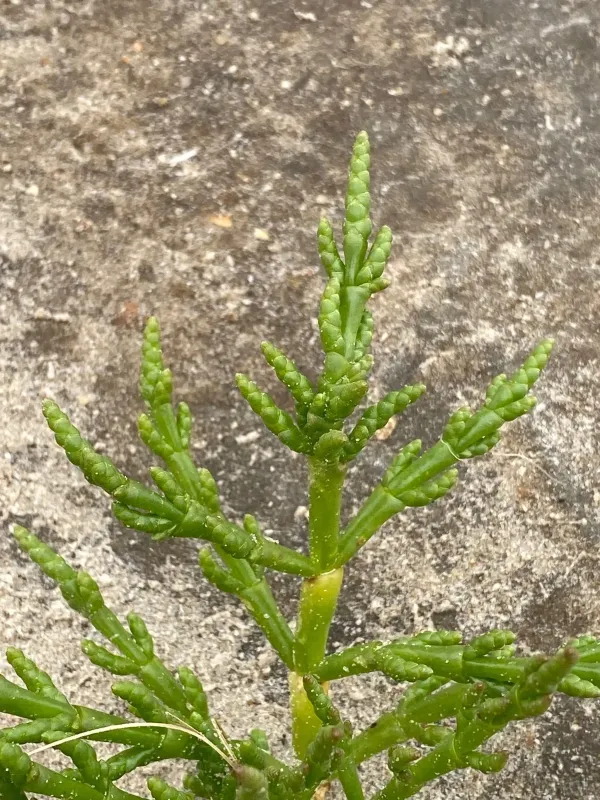
Description
Sowing dates
The sowing of Salicornia ramosissima is carried out in spring, once soil temperatures reach 12-15°C. April and May are typically the optimal months, depending on the specific climatic zone of cultivation.
High-vigor seeds should be sown at a shallow depth, no more than 0.5–1 cm. In saline soils, surface seeding with light compaction is recommended to ensure effective contact with the moist substrate.
A plant density of 50 to 100 plants per square meter is required to establish a robust crop stand. Preventing the drying of the topsoil layer during the first two weeks post-germination is crucial for success.
In large-scale operations, row sowing with 15–20 cm spacing is common. Because the seeds are tiny, careful field preparation is necessary to avoid burying them too deep, which would inhibit emergence.
This plant exhibits a strong tendency for self-seeding, which must be accounted for in crop rotation strategies to prevent it from becoming a weed in subsequent plantings.
Growing requirements
Salicornia ramosissima belongs to the Amaranthaceae family and is an obligate halophyte. This means it requires high concentrations of salt in the soil and consistent moisture to reach its full development.
The crop is excellently adapted to coastal environments and inland saline basins. It thrives in saline conditions that would prove toxic to most traditional agricultural crops.
Light requirements are high, as the plant cannot tolerate shading. Its efficient photosynthetic process in saline environments allows for rapid biomass accumulation, even on degraded lands.
Optimal soil moisture should be maintained through shallow groundwater levels or periodic irrigation with mineralized water. Excessive flooding with fresh water can negatively impact plant health.
A warm to hot climate is preferable, as Salicornia is a quintessential plant of salt-affected habitats that flourishes during the peak of the summer growing season.
Yield
The biological productivity of Salicornia ramosissima is heavily dependent on soil salinity levels and water availability. Under optimal management, green biomass yields can reach 15–20 metric tons per hectare.
Seed production is another vital economic indicator. The plant produces high quantities of small, oil-rich seeds that are increasingly valued in the food, cosmetic, and biofuel industries.
As a forage crop, Salicornia provides high nutritional value due to its unique profile of organic acids and essential minerals. It is highly palatable to livestock when mixed with other forage types.
The oil content of the seeds is a subject of significant interest for the sustainable production of renewable biofuels. The oil properties are often compared favorably with premium food-grade vegetable oils.
Peak yields are consistently recorded in irrigated saline areas, where controlled applications of mineralized water ensure a constant supply of nutrients required for rapid development.
Main diseases and pests
Salicornia ramosissima exhibits natural resistance to many common agricultural diseases, largely due to its unique chemical composition. The high salt content in its tissues creates a hostile environment for most fungal pathogens.
Pests rarely cause significant economic damage to this crop. However, in conditions of extreme humidity, aphid infestations may occasionally occur on the young, succulent shoots of the plants.
Physiological stress is often observed when the plant is subjected to sudden changes in osmotic pressure, such as excessive fresh water irrigation. This can lead to loss of turgor and leaf chlorosis.
Weed pressure is the primary threat during the initial growth stages. Being a halophyte, it competes poorly with aggressive weeds, making timely manual or mechanical weeding essential before canopy closure.
Continuous cropping in the same field requires periodic monitoring for soil-borne nematodes, although they are generally not a limiting factor for this highly specialized species.
Harvesting
Harvesting for green biomass should be timed before the stems begin to lignify, ensuring the crop remains succulent and nutritionally dense. This usually occurs in late summer or early autumn.
Seed harvest should be planned for the period of full maturity, indicated by the brownish color of the flowering tips. Precise timing is required to prevent widespread seed shattering in the field.
Mechanical harvesting requires the use of combines adjusted for a low cutting height. Due to the high water content of the biomass, post-harvest drying in windrows or industrial dryers is required.
For culinary use (marketed as "sea asparagus"), harvest is conducted manually by selecting the young, tender tips (5–10 cm), which maintain a characteristic crunch and salty flavor.
Well-managed harvest practices allow for both the collection of marketable produce and the optimization of future field density through natural reseeding processes.