
Salicornia pusilla
Salicornia pusilla
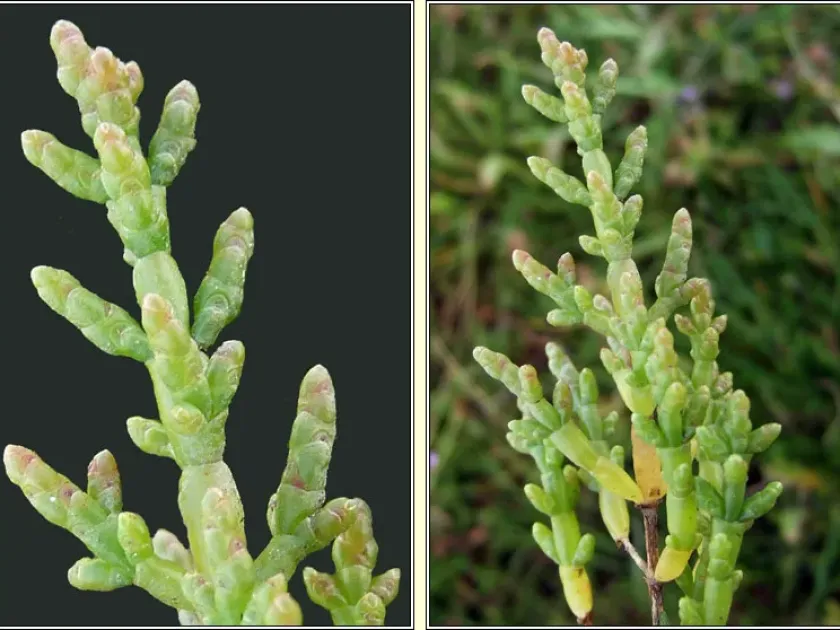
Description
Sowing dates
Sowing of Salicornia pusilla is conducted in the spring when soil temperatures reach 10–12 degrees Celsius. Ensuring stable moisture levels during the initial growth phase is critical, as the seeds of this halophyte are sensitive to desiccation.
The optimal planting depth is no more than 0.5–1 centimeter. Fine seeds require shallow sowing followed by light compaction to establish firm contact with the substrate.
Salicornia pusilla seeds demonstrate high germination rates under saline conditions; therefore, pre-treating the soil with salt concentrations can accelerate uniform seedling emergence.
The seeding rate is calculated based on the target plant density, typically around 200,000 to 300,000 plants per hectare for commercial production.
In regions with mild climates, late-autumn or winter sowing is possible, allowing the plants to utilize winter moisture reserves for an active start to the growing season.
Growing requirements
Salicornia pusilla, a member of the Amaranthaceae family, is an obligate halophyte whose biology depends entirely on high soil salinity levels. The crop displays a unique ability for osmoregulation in environments that are lethal to conventional agricultural crops.
The plant thrives in well-lit areas; shading significantly reduces growth rates and biomass accumulation. High intensity of sunlight is essential for optimal photosynthesis and metabolism in the succulent stems.
Typical habitats include coastal salt marshes and saline areas near internal water bodies. The crop is highly demanding of sodium and chloride ions in the soil, which it utilizes to maintain cellular turgor.
For successful vegetation, maintaining high soil moisture levels is necessary. In industrial scales, drip irrigation with mineralized water is effective, successfully mimicking the natural habitat of the species.
The soil composition should be primarily sandy or silty, offering excellent drainage to prevent freshwater stagnation, which suppresses the development of this crop.
Yield
The average yield of Salicornia pusilla green mass varies significantly depending on the salinity levels of irrigation water and soil type.
Under intensive management and an optimal salt balance, yields of 15–25 tonnes of marketable produce per hectare per season can be achieved.
Yield depends on the growth phase: to obtain tender young shoots, harvesting is performed before stem lignification, which reduces total biomass volume but increases product quality.
Periodic harvesting allows for multiple cuttings within a single growing season, stimulating branching and the regrowth of new, succulent shoots.
A key factor in increasing productivity is maintaining proper planting density, which prevents sparse stands and reduces resource competition between plants in the same row.
Main diseases and pests
The primary constraint for this crop is not the presence of pests, but the high risk of fungal disease infections resulting from stagnant freshwater conditions.
Under conditions of waterlogging and low salt concentration, root rot caused by soil pathogens may occur, leading to rapid plant mortality.
Pests specialized in halophytes are rarely encountered; however, young shoots may occasionally suffer from aphid infestations that feed on plant sap during peak growth periods.
To prevent disease, crop rotation is recommended, along with avoiding the compaction of the topsoil layer to ensure adequate gas exchange in the root zone.
Local damage caused by certain species of cutworm larvae can occur, though serious epiphytotics for Salicornia pusilla in agricultural settings have not been widely reported.
Harvesting
Harvesting begins when shoots reach a height of 15–20 centimeters, at which point they are maximally hydrated and contain the lowest levels of fiber.
Collection is performed manually or using mechanized harvesters with low cutting heights, ensuring precise separation of the succulent stem parts from the base.
Post-harvest, the product must be immediately cooled to preserve its market appearance and prevent moisture loss, as the plant is prone to rapid wilting.
Harvested shoots are primarily used as a vegetable crop, valued for their salty taste and high content of iodine, minerals, and trace elements.
For the food industry, compliance with product purity standards is vital, excluding any mechanical impurities or soil particles from the harvested mass.