
Salicornia perennans
Salicornia perennans
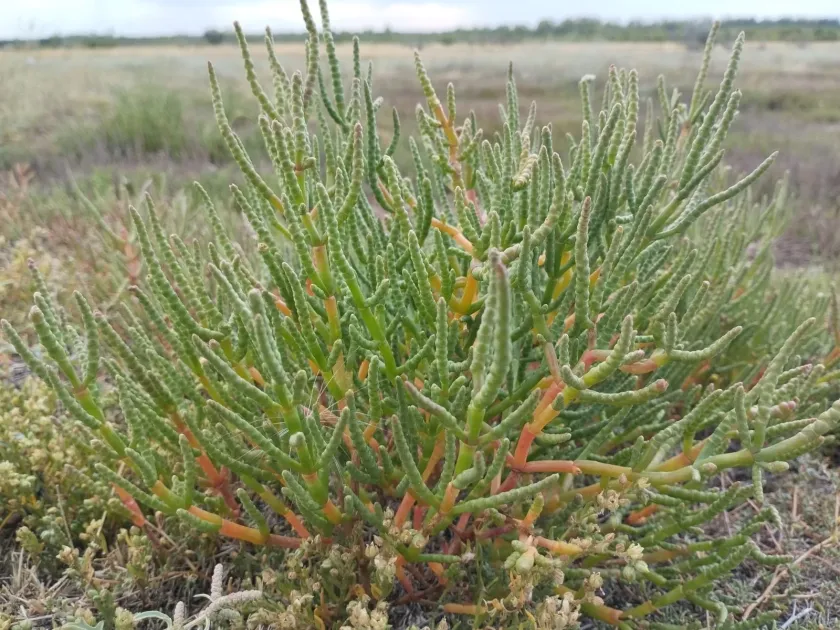
Description
Sowing dates
Salicornia perennans is an annual halophytic plant belonging to the Amaranthaceae family. It has gained significant attention in modern agriculture as a viable crop for highly saline environments where traditional crops fail to survive.
Sowing should take place in the spring once soil temperatures reach 10–12°C. The seeds are small and should be placed near the surface, at a depth of approximately 0.5–1 cm, to ensure optimal germination and emergence.
The row-seeding method with intervals of 25–30 cm between rows is highly recommended. This allows for uniform plant distribution and facilitates mechanical maintenance operations such as weeding.
Proper soil contact is essential for the seeds. Following the sowing process, light compaction of the soil can improve moisture retention around the seeds, which is crucial in the saline environments where the plant is established.
Strategic timing of sowing ensures that the plant's peak vegetative growth coincides with the warmest part of the season, which is essential for biomass accumulation in this species.
Growing requirements
The primary requirement for successful growth is a saline substrate or irrigation with brackish water. Salicornia perennans is a facultative halophyte that thrives under high salinity levels that would be toxic to most conventional crops.
The plant is highly heliophilic and requires full sun exposure. Shading results in weakened stems, lower biomass yield, and a reduction in the accumulation of the bioactive compounds for which the plant is valued.
Regarding soil composition, it adapts well to various alkaline and neutral substrates. While it grows well on saline lands, limited nitrogen fertilization can be beneficial in the early growth stages to support initial development.
Temperature requirements are generally high, with an optimal growth range between 20°C and 30°C. The succulent nature of the plant allows it to handle intense solar radiation and temporary heat spikes efficiently.
Water management is critical during the initial germination phase. Once the root system is established, the plant becomes remarkably resilient, though maintaining consistent moisture levels in the root zone maximizes yield.
Yield
The economic value of Salicornia perennans is multifaceted. Young, succulent shoots are increasingly sought after in the gourmet food industry as a salty, mineral-rich vegetable.
The seeds are a valuable source of edible oil, which is comparable to other non-traditional oilseed crops. This makes the plant a promising candidate for large-scale industrial farming on abandoned saline lands.
As a forage crop, it provides a high-protein supplement for livestock. When dried and processed, it serves as a valuable mineral-dense feed, especially in arid coastal regions.
Beyond direct products, the plant acts as a powerful phytoremediator. By absorbing excessive salts from the soil, it contributes to the long-term reclamation of land for broader agricultural use.
Yields are highly dependent on the level of salinity and agricultural care. Under optimal conditions, farmers can achieve up to 20 tons of fresh biomass per hectare, providing a sustainable return on marginal land.
Main diseases and pests
While Salicornia perennans is resistant to most common agricultural pests, fungal diseases can occur under conditions of poor soil aeration and excessive humidity during the growing season.
Certain insects, such as aphids, might target young shoots, though their impact is typically minor due to the high salt concentration in the plant tissues, which acts as a natural deterrent.
Competition from other salt-tolerant weeds can hinder growth. Regular monitoring and mechanical weeding during the early stages of development are necessary to ensure the crop has adequate access to nutrients and light.
Post-harvest threats include the risk of mold if the biomass is not dried properly. Given the succulent nature of the plant, efficient moisture removal is essential for maintaining product quality.
Integrated pest management should focus on cultural practices and biological controls to maintain the crop’s status as a food-grade product, minimizing the need for chemical intervention.
Harvesting
Harvesting timing is dictated by the intended use of the crop. For fresh consumption as a culinary vegetable, shoots should be harvested while they are still young, tender, and bright green.
For seed production and oil extraction, the harvest is delayed until the plants reach full maturity and the stems turn a reddish-brown color, indicating maximum oil content.
Mechanical harvesting is carried out using standard grain harvesters or mowers, depending on the desired end product. The equipment must be properly calibrated to handle the specific biomass characteristics of this halophyte.
Quick drying after harvest is vital for industrial processing. In many cases, field drying is sufficient in arid regions, provided the moisture content is checked regularly to prevent spoilage.
Storage should prioritize dry, well-ventilated conditions. Proper packaging is essential to prevent moisture uptake, especially if the seeds are to be stored for extended periods before processing.