
Salicornia obscura
Salicornia obscura
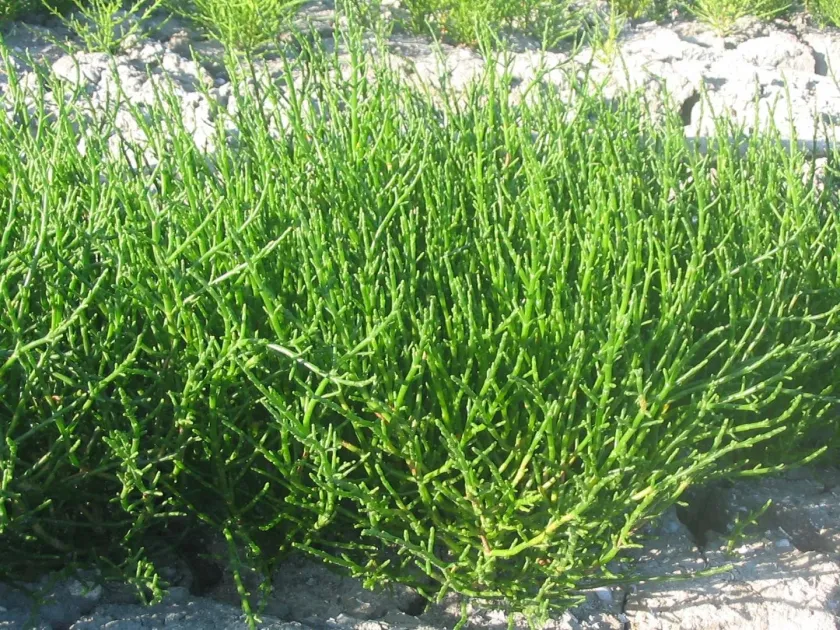
Description
Sowing dates
Sowing of Salicornia obscura takes place in the spring when soil temperatures consistently stay above 10°C. Late April to May is considered the ideal window to ensure moisture availability for germination.
A fine-textured soil preparation is essential due to the small size of the seeds. Seeds should be sown at a shallow depth of 0.5–1 cm to ensure successful emergence and prevent seedling exhaustion.
The sowing density depends on the intended yield—green biomass or seed production. Wide-row sowing with 30–45 cm spacing is recommended to simplify weed management and allow for adequate growth space.
In natural conditions, seeds germinate when soil salinity is temporarily reduced by rainfall. Farmers should replicate this by managing irrigation levels, ensuring the soil remains moist but not overly saturated with salt during the early stages.
Uniformity in seed distribution is crucial for consistent crop canopy development. Mechanical seeders calibrated for small seeds are highly effective in maintaining the desired population density per hectare.
Growing requirements
Salicornia obscura belongs to the Amaranthaceae family and is an obligate halophyte. This means it thrives in environments with high salt concentrations where most traditional agricultural crops would fail.
The plant is highly heliophilic, meaning it requires intense sunlight for optimal development. Shaded areas significantly reduce biomass production and negatively impact the overall vigor of the crop.
Soil requirements focus on saline environments, such as salt marshes or coastal zones. While the plant is tolerant to high mineral levels, soil aeration is vital for the root system to facilitate nutrient uptake.
Climate adaptability makes it suitable for moderate to subtropical regions. The crop is remarkably resistant to heat stress, making it an excellent candidate for cultivation in arid, high-salinity lowlands.
Water requirements include managing the salinity of the irrigation source. It is not necessarily a water-demanding crop, but maintaining a specific soil moisture level is critical during the active vegetative growth phase.
Yield
Yield potential is highly dependent on salinity levels and agricultural management practices. Under optimal conditions, this crop provides a viable way to utilize land that is otherwise unsuitable for conventional crops.
Green biomass yields can range from 15 to 25 tons per hectare. This biomass is increasingly valued as a forage component or as a source of minerals and high-quality protein for livestock rations.
Seed production varies depending on the length of the growing season. With proper care and sufficient light, yields between 500 and 800 kg per hectare can be achieved for oil extraction purposes.
The economic value of the crop is enhanced by the oil content in its seeds, which is rich in polyunsaturated fatty acids. This makes Salicornia obscura a niche but high-value product for the health and agricultural sectors.
Strategic harvesting cycles allow for multiple cuts of green matter in specific climates, further increasing the total seasonal productivity and maximizing the utilization of saline acreage.
Main diseases and pests
Fungal diseases related to root rot are the primary threat, especially in conditions with stagnant water. Proper drainage management is the most effective preventative measure against these pathogens.
Insect pests, such as aphids, can cause significant damage to the succulent stems during the early growth stages. Regular field monitoring is necessary to prevent mass infestations that reduce overall vigor.
Weed competition can be intense during the seedling stage. Although Salicornia obscura eventually dominates saline-prone habitats, early intervention is required to ensure it is not outcompeted by more aggressive weeds.
Improper irrigation management, such as sudden shifts in salinity levels, can cause osmotic stress. This makes the plants more susceptible to opportunistic infections and environmental damage.
Integrated pest management (IPM) is strongly recommended to protect the crop. Because it is often used for human consumption or animal feed, the use of chemical pesticides must be strictly limited and regulated.
Harvesting
Harvesting is determined by the end use: green biomass is collected during the active vegetative growth phase, while seeds are harvested after the plants have matured and dried in the field.
For green mass, mechanical mowers are used with height adjustments to prevent damage to the lower stem base, which allows for potential regrowth. Careful height management is key to maintaining crop longevity.
Seed harvesting occurs when the stems turn brown and brittle. This phase indicates that the seeds have reached maximum oil content and are ready for threshing and cleaning processes.
Immediate post-harvest processing is required because the high water and salt content in the tissues can lead to rapid decomposition if the material is not dried or processed promptly.
Seed storage must be conducted in well-ventilated, low-humidity conditions. Proper storage prevents fungal growth and ensures that the valuable oil components remain stable for industrial or nutritional use.