
Salicornia brachiata
Salicornia brachiata
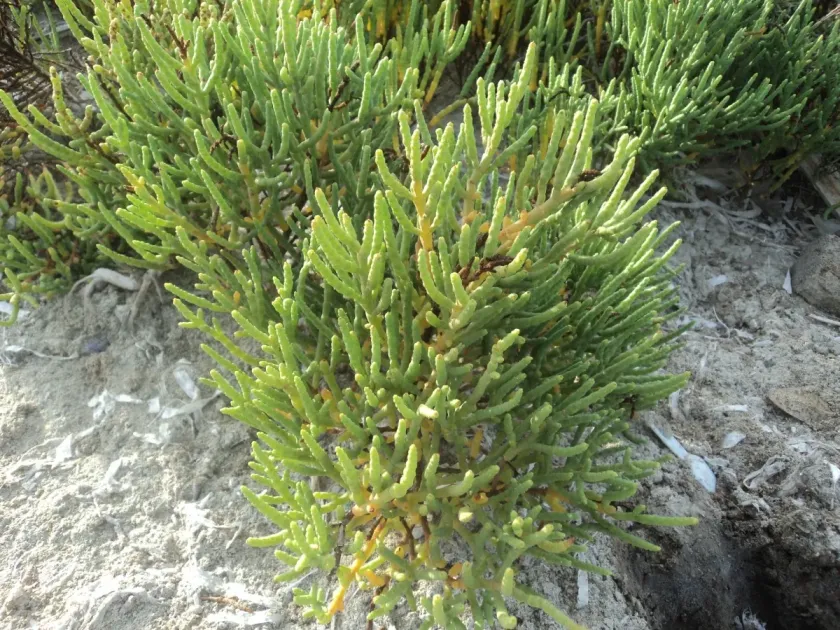
Description
Sowing dates
Salicornia brachiata is an annual halophyte that is propagated primarily through seeds, requiring specific temperature conditions for germination in the spring.
Sowing should take place once soil temperatures stabilize between 15 and 20 degrees Celsius to ensure vigorous growth of the young seedlings.
The seeds are exceptionally small and require a shallow sowing depth to receive sufficient light, which is a crucial trigger for their successful germination.
Adequate moisture must be maintained in the top layer of the soil during the initial growth phase, often using specialized irrigation systems.
Professional cultivation often utilizes direct drilling techniques, followed by light rolling to optimize seed-to-soil contact in saline environments.
Growing requirements
As a member of the Amaranthaceae family, this species is classified as an obligate halophyte, meaning it thrives in environments with high salt concentrations.
The crop requires soils with high salinity levels, often irrigated with brackish or seawater to maintain its natural metabolic processes and growth.
Exposure to full sunlight is critical for the development of its succulent, photosynthetic stems, as any shading significantly reduces yield potential.
Soil texture should facilitate good drainage, as waterlogged conditions in combination with salt can lead to root system failure in younger plants.
This crop is uniquely adapted to thrive on arid, coastal, or degraded salt-affected lands where traditional agricultural plants would suffer from osmotic stress.
Yield
The primary agricultural interest in Salicornia brachiata lies in its potential as an oilseed crop, with seeds rich in polyunsaturated fatty acids.
The biomass of the plant serves as a nutritious fodder source, particularly in regions where fresh water is scarce and soil salinity is high.
Under managed conditions with optimal salinity, seed yields can reach notable levels, offering a viable economic alternative for salt-affected territories.
Recent studies suggest that this species can contribute to sustainable agricultural systems by producing high-value oils on previously unproductive land.
Beyond oil and fodder, the succulent segments of the plant are increasingly used in gourmet cuisine as a natural sea-salt vegetable product.
Main diseases and pests
The natural high salinity of the plant tissues provides a robust barrier against many common agricultural pests and soil-borne diseases.
While remarkably resistant, the crop can be sensitive to sudden changes in osmotic pressure, which may occur if irrigation is abruptly switched to fresh water.
Root rot fungi may develop if the soil becomes excessively waterlogged, making proper irrigation management and field drainage essential maintenance practices.
Weed control is rarely a significant concern, as the salty soil conditions naturally suppress the invasion of most conventional weed species.
Pest management focuses on monitoring local insect populations that may have adapted to halophytic hosts, though major outbreaks remain infrequent.
Harvesting
Harvesting strategies vary depending on the intended use; gathering green biomass for fresh consumption or fodder happens before the plant becomes woody.
Seed harvesting is conducted at the end of the vegetative cycle, once the plants reach full maturity and the seeds have developed their lipid content.
It is vital to time the harvest accurately to prevent seed shattering, a natural mechanism the plant uses to spread its seeds across the saline environment.
Mechanical harvesting requires specific adjustments to standard equipment to ensure delicate seeds are captured efficiently without significant loss.
Post-harvest processing involves rapid drying to maintain oil quality and prevent microbial growth during the storage of the harvested seed lots.