
Ruellia purshiana
Ruellia purshiana
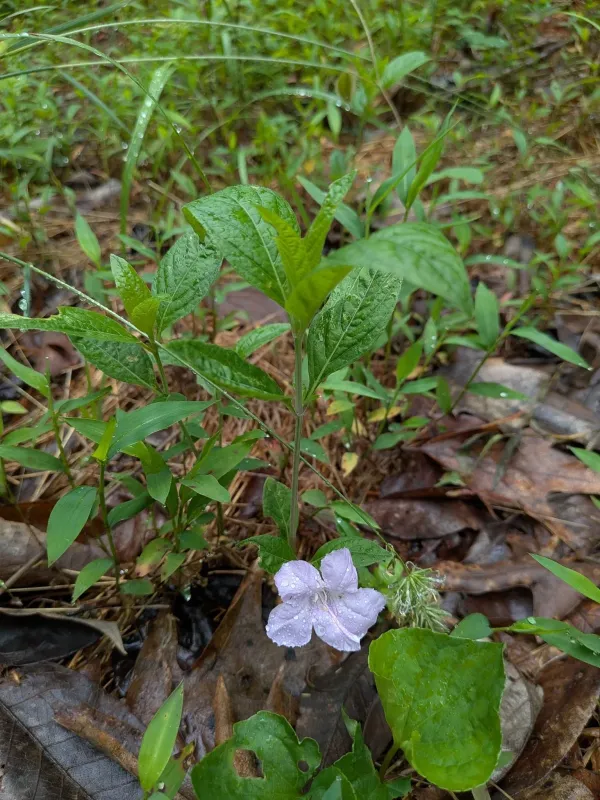
Description
Growing requirements
Ruellia purshiana is a perennial herbaceous plant belonging to the Acanthaceae family. This species is native to the southeastern United States, where it thrives in dry, rocky soils and open woodland environments.
The plant exhibits typical characteristics of the Ruellia genus, featuring opposite leaves and funnel-shaped flowers that display pale purple or lavender hues. Its root system is well-adapted to survive conditions of moderate drought.
Successful cultivation of Ruellia purshiana requires well-draining soil with a neutral to slightly acidic pH level. The plant is highly sensitive to waterlogging, making the installation of a high-quality drainage layer essential when planting in heavy clay soils.
The species thrives in full sun or partial shade locations, where it can develop vigorously and produce abundant blooms. In regions with harsh winters, winterizing the root system is necessary, as the plant is not fully frost-hardy.
Its primary horticultural use is in ornamental landscaping and garden design. It is frequently incorporated into wild-style flower beds, rock gardens, and mass plantings where a low-maintenance, long-blooming specimen is desired.
Main diseases and pests
Root rot is the most significant threat to Ruellia purshiana, usually caused by excessive soil moisture. Preventive measures involve strictly regulating irrigation and ensuring the growing medium remains sufficiently aerated.
In greenhouse conditions or environments with high humidity, the plant may be susceptible to spider mite infestations. Regular inspection of the underside of leaves and managing air humidity help mitigate this risk.
Aphid damage can occasionally occur, necessitating the use of systemic insecticides if pest populations exceed thresholds. Monitoring plant vigor is critical, as stressed individuals are more prone to infections.
Viral infections are rare but require immediate removal of symptomatic plant parts to prevent further transmission. Periodic sanitary pruning is a fundamental aspect of maintaining overall plant health.
To control the spectrum of pests effectively, an integrated pest management approach using biological control agents is recommended, especially for decorative residential landscapes.