
Rubia tenuifolia
Rubia tenuifolia
Description
Sowing dates
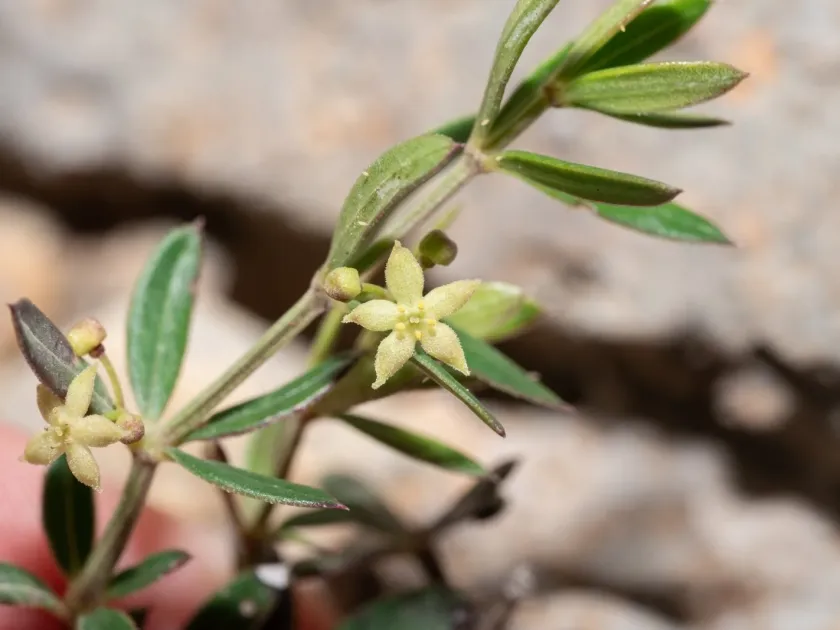
Rubia tenuifolia is a perennial herbaceous plant belonging to the Rubiaceae family. It is valued for its root system, which contains bioactive compounds. The plant typically features a creeping or climbing growth habit.
Sowing should be performed in early spring once the soil temperature reaches at least 10 degrees Celsius. In regions with milder climates, late autumn sowing is also an option, as the seeds benefit from cold stratification.
Seeds are sown at a depth of 1.5 to 2 centimeters. Maintaining proper row spacing, typically 50–60 cm apart, is essential to allow for adequate root development and mechanical weeding throughout the growth cycle.
Germination is generally slow, often taking several weeks. Ensuring consistent moisture levels during the germination phase is critical for achieving a uniform stand of plants.
Weed control is of the utmost importance during the first year of growth. Since Rubia tenuifolia grows slowly initially, failure to manage competition from weeds can lead to significant crop failure.
Growing requirements
The plant thrives in fertile, well-drained sandy or loamy soils. It is highly sensitive to waterlogging, as excessive moisture can quickly lead to root rot and other fungal diseases.
An optimal soil pH ranges between 6.5 and 7.5. On acidic soils, liming is recommended prior to planting to ensure the bioavailability of nutrients required for healthy root expansion.
Rubia tenuifolia requires full sun exposure for optimal growth and secondary metabolite synthesis. Shaded environments tend to lower the concentration of active substances in the roots.
Although the plant is somewhat drought-tolerant once established, supplemental irrigation during dry spells is beneficial for maximizing yield, especially in the second year of cultivation.
Basic fertilization with phosphorus and potassium is advised to promote vigorous root systems, which are the main harvestable part of the crop.
Yield
Yield is measured by the biomass of the harvested roots. The plants should ideally be harvested in their third or fourth year to ensure the roots have reached full maturity and chemical potential.
Average yield expectations range between 1.5 and 3 tons of dried roots per hectare. Variability in yield is often linked to soil fertility, planting density, and the presence of invasive weeds.
Quality control is paramount for commercial production. Roots must be handled with care during harvesting to prevent bruising, which can affect the color and chemical composition of the final extract.
Post-harvest processing involves cleaning and drying. The drying process must be gradual, using temperatures below 50 degrees Celsius to prevent the degradation of heat-sensitive components.
Proper storage in a cool, dry place is essential to maintain the quality of the harvested material before it is transported for processing in the pharmaceutical or dye industry.
Main diseases and pests
Common pests include aphids and various beetle species that may target young shoots. Integrated pest management practices should be employed to control infestations without damaging the crop.
Fungal pathogens such as leaf spot are more prevalent in high-humidity conditions with poor airflow. Maintaining wide enough row spacing and thinning the stands can significantly reduce infection risks.
- Monitoring for pest presence.
- Applying biological fungicides if needed.
- Proper crop rotation with non-Rubiaceae species.
Root rot is often the most destructive issue, usually resulting from poor field drainage. Identifying and removing infected plants immediately is necessary to protect the surrounding crop.
Maintaining high field sanitation standards and controlling weeds that act as alternate hosts for viruses or pests are key strategies for a successful harvest.
Harvesting
The harvest occurs in the autumn of the final cultivation year, typically when the stems begin to wither. Harvesting at this time ensures the highest concentration of active compounds in the root biomass.
Specialized digging equipment, such as adjusted root lifters or plows, is used to reach the depth of the root system. Proper adjustment is necessary to avoid severing or damaging the main roots.
Once lifted, roots are shaken to remove excess soil. Rapid cleaning is essential; roots should be rinsed briefly to remove dirt without leaching out valuable secondary metabolites.
Drying is performed in climate-controlled environments or specialized drying barns. Adequate ventilation is necessary to ensure the moisture content is reduced to safe levels for storage.
The final product is usually packaged in breathable containers to prevent moisture accumulation, which could cause mold development during long-term storage or transit.