
Virginia rose
Rosa virginiana
Description
Growing requirements
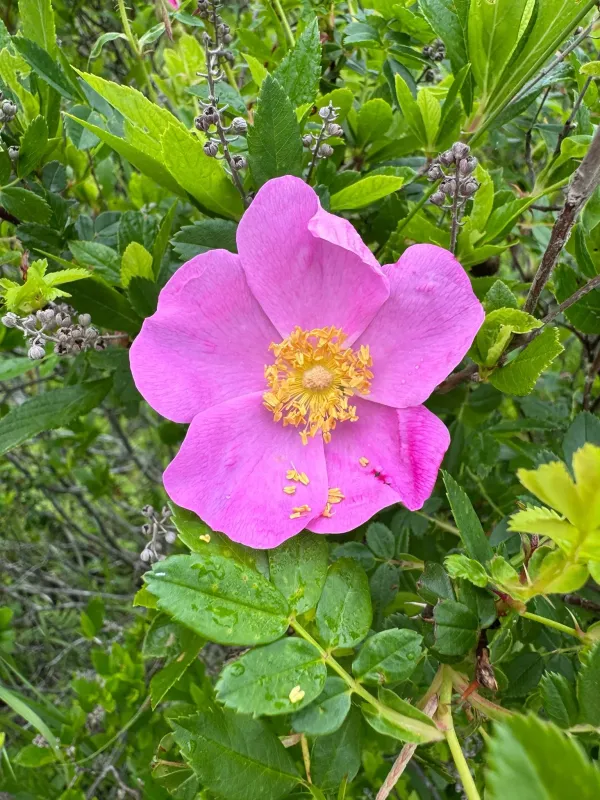
The Virginia rose (Rosa virginiana) is a deciduous shrub species belonging to the Rosaceae family. It is native to eastern North America, spanning from Newfoundland to Alabama, where it thrives in a variety of habitats, including rocky slopes and forest edges.
This shrub is highly valued for its extreme winter hardiness and adaptability. It performs best in full sun but can tolerate partial shade, making it a versatile choice for landscape architects working in diverse climatic zones.
Regarding soil, Rosa virginiana is not overly selective. It prefers moist, well-drained loamy soils but can grow in acidic or poor-quality substrates. Its dense root system makes it an excellent plant for erosion control in gardening projects.
Cultural practices are relatively straightforward, requiring moderate moisture levels during the growing season. Pruning should be performed in early spring to remove dead wood and encourage vigorous new growth for the upcoming season.
The plant is highly regarded for its aesthetic seasonal changes. Its glossy green foliage transforms into a stunning spectrum of red, orange, and gold during autumn, followed by bright red rose hips that provide food for wildlife throughout the winter.
Main diseases and pests
Despite its robustness, the Virginia rose can be susceptible to common rose diseases. Powdery mildew is the most frequent issue, particularly in humid climates where stagnant air prevents proper foliage drying.
Black spot is another fungal threat that can cause premature defoliation. To minimize this, irrigation should be directed at the base of the plant, avoiding the foliage, and crowded planting areas should be thinned to improve ventilation.
Aphids are the primary insect pests affecting the young, tender buds and leaves. If an infestation occurs, they can be manually removed or treated with insecticidal soaps to maintain plant health without harming beneficial garden insects.
Spider mites may become a problem during periods of intense heat and low precipitation. Keeping the soil adequately moist and maintaining general plant vigor are the best defenses against these persistent sap-sucking pests.
- Remove and destroy all infected foliage during autumn cleanup.
- Apply mulch to retain soil moisture and suppress weed competition.
- Monitor for pests early in the spring to prevent large-scale infestations.