
Giraldi's Rose
Rosa giraldii
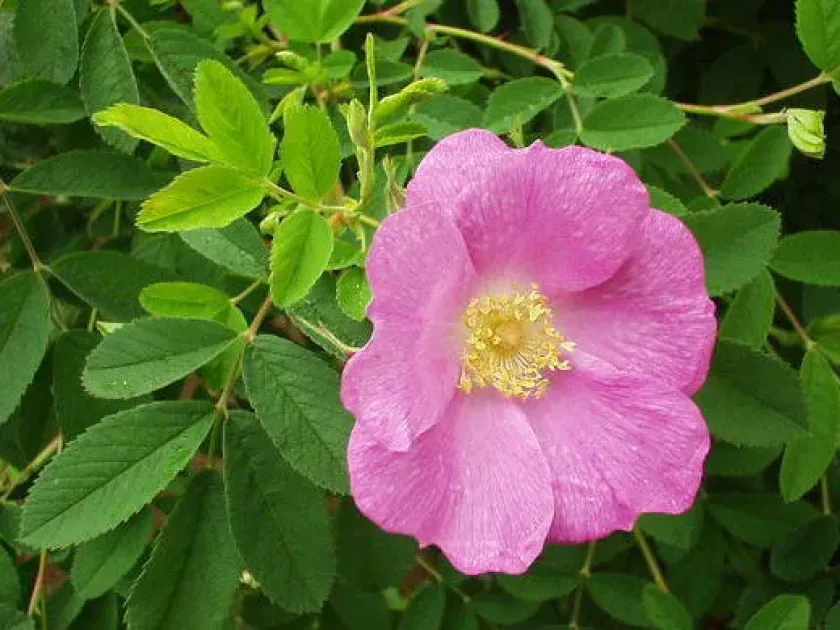
Description
Sowing dates
Propagation of Rosa giraldii is typically achieved through seed sowing or stem cuttings, depending on the desired genetic consistency and growth speed of the plant.
Seeds require a prolonged period of stratification at low temperatures to break dormancy, which is best achieved by planting them outdoors during the autumn months.
Stem cuttings are best collected during the active growing season in mid-summer, selecting healthy, semi-hardwood shoots for higher success rates in root development.
When transplanting nursery-grown specimens, ensure the hole is wide enough to accommodate the root system comfortably without bending or damaging primary roots.
Initial establishment requires consistent moisture and protection from direct mid-day sun until the plant has fully developed a robust root system in its new location.
Growing requirements
As a member of the Rosaceae family, Giraldi's Rose is native to the mountainous regions of China, exhibiting a rugged nature suitable for various temperate climates.
It thrives in full sun exposure, although it can tolerate light dappled shade during the hottest parts of the day without significant loss of floral productivity.
The preferred soil type is a deep, well-draining loam that remains moist but never waterlogged, as excessive moisture often leads to root rot in this species.
Periodic soil amendment with organic matter, such as compost or well-rotted manure, provides the necessary nutrients for sustained growth and seasonal flowering.
The plant is highly regarded for its hardiness, making it an excellent choice for landscape designs that prioritize low-maintenance, ecologically stable shrubs.
Main diseases and pests
Common botanical threats include fungal diseases such as powdery mildew, which thrive in stagnant air conditions or during periods of prolonged high humidity.
Black spot is another concern; it is frequently prevented by maintaining good spacing between plants to ensure adequate airflow throughout the canopy structure.
Insects like aphids and spider mites can infest the foliage, particularly during dry spells, which necessitates routine inspection of the undersides of the leaves.
Integrated pest management strategies, including the use of horticultural oils and neem-based sprays, are effective for controlling minor infestations before they spread.
Sanitation practices, such as removing fallen leaves at the end of the season, significantly reduce the wintering grounds for pathogens that affect the plant's health.