
Frankfurt Rose
Rosa francofurtana
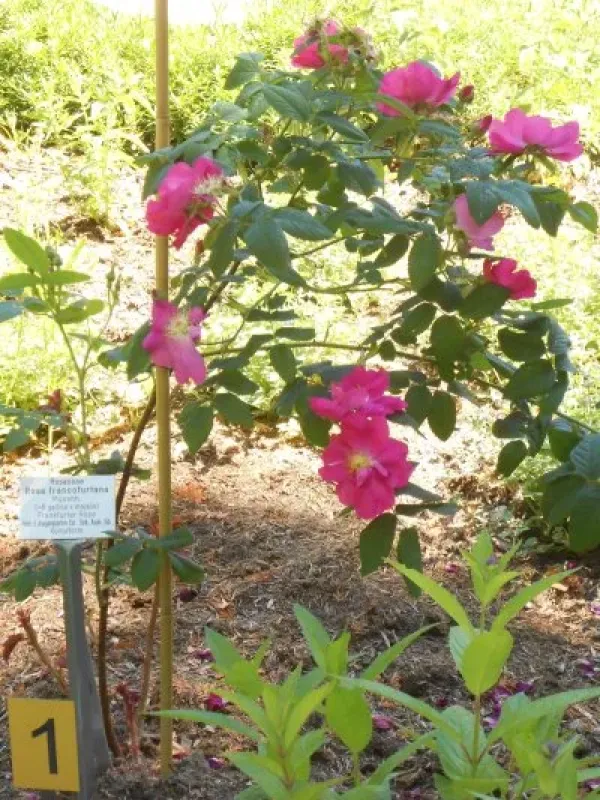
Description
Growing requirements
The Frankfurt Rose, botanically identified as Rosa francofurtana, belongs to the Rosaceae family. This hybrid is widely recognized for its historical significance and robust growth habit.
The plant requires a location with full sun exposure to promote healthy development and ensure abundant flowering throughout the summer season.
Ideal soil conditions consist of well-draining, nutrient-rich loamy soil. The pH level should ideally be slightly acidic to neutral to maximize nutrient uptake.
This species is well-adapted to temperate climates, showing excellent winter hardiness. Consistent watering is required during the initial establishment period.
Maintenance practices involve annual pruning to remove old wood, which stimulates the growth of new, flower-bearing shoots in the following season.
Main diseases and pests
Powdery mildew is a common threat that appears as a white, powdery coating on foliage, particularly in environments with poor air circulation.
Black spot is a fungal disease that thrives in humid conditions, causing dark lesions on leaves and eventually leading to defoliation of the shrub.
Aphids are the most frequent insect pests, clustering on tender new growth and consuming plant sap, which can stunt the development of flower buds.
Rose sawfly larvae can cause significant damage by skeletonizing the leaves, which reduces the plant's ability to photosynthesize effectively.
Integrated pest management strategies, including monitoring and appropriate chemical or biological controls, are essential for keeping the plant healthy.
Harvesting
Harvesting petals for culinary or cosmetic use should be done early in the morning when the dew has just evaporated but the oil concentration is high.
Rose hips, if harvested for medicinal purposes, should be picked after the first light frost, as this often improves their flavor and nutritional profile.
For ornamental bouquets, flowers should be harvested when the buds begin to unfurl, ensuring a longer vase life once cut.
All harvested plant parts must be handled with care to prevent bruising, which can lead to oxidation and loss of quality in the end product.
Proper storage involves spreading the material in a cool, dark environment with good ventilation to ensure that moisture is removed gradually.