
Rosa banksiopsis
Rosa banksiopsis
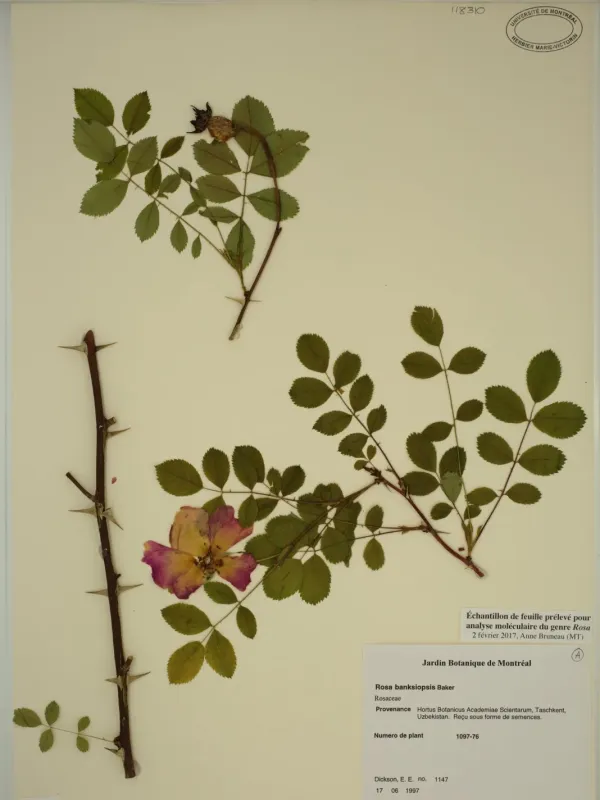
Description
Growing requirements
Rosa banksiopsis is a distinctive species within the Rosaceae family. Known for its wild characteristics, it is often utilized in breeding programs and as a hardy ornamental shrub in landscape design.
Native to central and western China, this plant thrives in diverse habitats ranging from forested slopes to riverbanks. It has adapted to various soil textures, provided they offer adequate moisture drainage.
The botanical structure of this shrub features elegant, arching stems and delicate foliage typical of the genus. Its physical appearance allows it to integrate seamlessly into naturalized garden settings.
For successful growth, this species requires a location with partial to full sunlight. It exhibits high tolerance to environmental stressors but performs best in soil enriched with compost or well-rotted organic matter.
Management practices include pruning spent wood to encourage structural growth and occasional fertilization to support flowering. Consistent moisture management is critical during the establishment phase.
Main diseases and pests
The primary fungal threat to Rosa banksiopsis is powdery mildew, particularly in environments with high humidity or stagnant air circulation around the canopy.
Black spot disease may manifest during wet seasons, requiring immediate sanitation of fallen leaves to prevent the recurrence of fungal spores in the following season.
Pest infestations such as aphids and spider mites are common during the spring and summer. These pests can significantly weaken the plant if left uncontrolled.
Integrated Pest Management (IPM) strategies, including the introduction of beneficial insects, are highly recommended for sustainable maintenance.
Proper spacing between plants is essential to reduce the risk of contagious diseases and to ensure optimal exposure to sunlight and ventilation.