
Veitch's rhododendron
Rhododendron veitchianum
Description
Growing requirements
Veitch's rhododendron (Rhododendron veitchianum) is an elegant shrub belonging to the Ericaceae family. Originally found in the mountainous forests of Myanmar, Thailand, and Vietnam, it typically grows in high-altitude environments characterized by consistent moisture and cool temperatures.
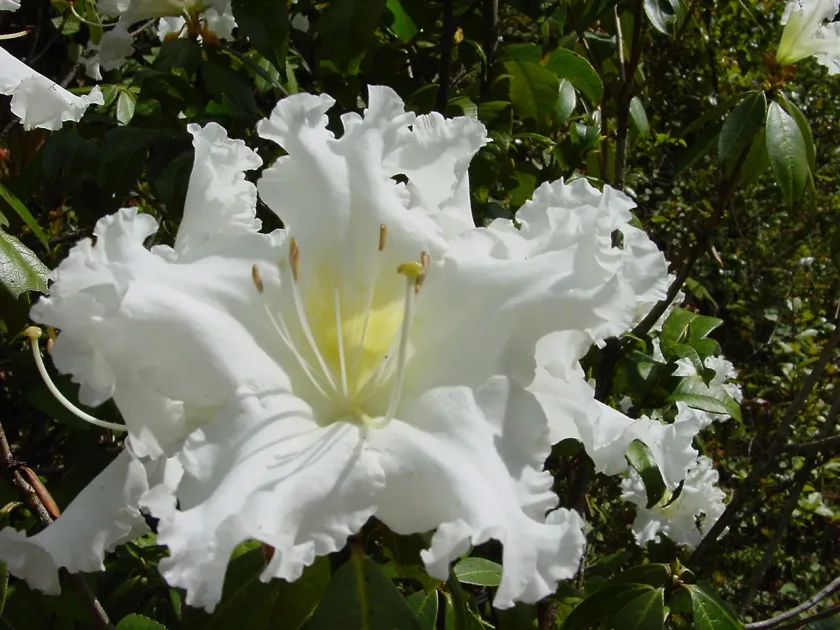
Botanically, it is classified as a showy evergreen shrub that can exhibit both terrestrial and epiphytic growth habits. Its key features include large, white, fragrant flowers with fringed petals and distinctively textured, dark green leaves that are densely arranged on woody stems.
The culture requires a specific acidic substrate to flourish. Growers should utilize a mix of sphagnum peat, pine bark, and perlite to maintain a pH level between 4.5 and 5.5, which is essential for nutrient uptake in this species of rhododendron.
Environmental conditions are paramount; the plant demands high air humidity and protection from harsh direct sunlight. In temperate climates, it is strictly an indoor or greenhouse plant, as it cannot withstand freezing temperatures and requires stable warmth throughout the year.
Regular maintenance involves light pruning to maintain shape and the removal of spent flowers to encourage further development. Proper air circulation is vital to prevent the buildup of stagnant moisture, which can quickly lead to systemic issues within the root structure.
Main diseases and pests
The most significant threats to Veitch's rhododendron are fungal diseases, particularly Phytophthora, which thrives in poorly drained soil. Maintaining an impeccable balance of irrigation and drainage is the primary defense against such pathogens.
Common pests include spider mites and aphids, which frequently target the soft growth of the plant. Integrated pest management, including regular foliage washing and the application of horticultural oils, is recommended to keep the plant healthy and vigorous.