
Soulie's rhododendron
Rhododendron souliei
Description
Growing requirements
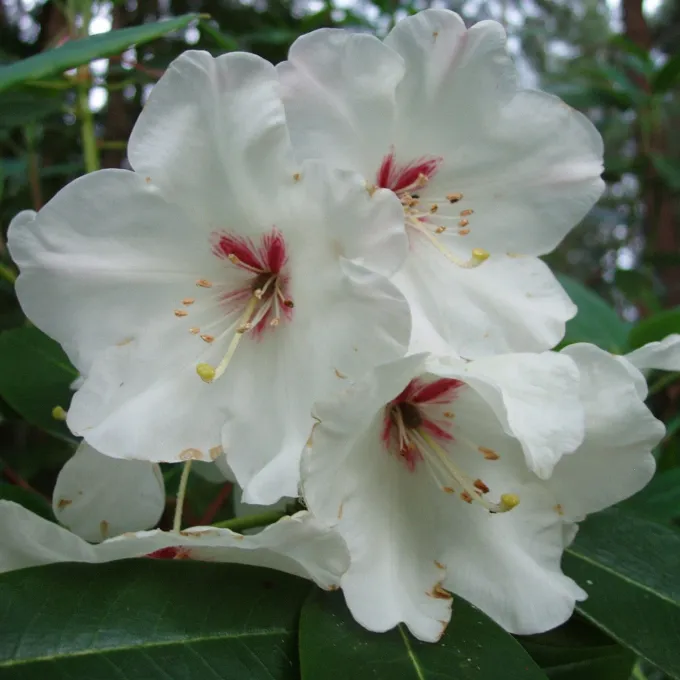
Soulie's rhododendron (Rhododendron souliei) is an evergreen flowering shrub belonging to the Ericaceae family. Originating from the high-altitude mountainous regions of Western China, this species is prized for its delicate, bowl-shaped flowers that bloom in late spring.
Successful cultivation requires an acidic, well-draining soil rich in organic matter. Gardeners must ensure that the planting site has excellent drainage, as the shallow fibrous root system of this rhododendron is highly susceptible to rot in waterlogged conditions.
The plant thrives in partial shade, where it is protected from harsh direct sunlight and desiccating winds. In temperate climates, providing a layer of pine bark mulch is essential to maintain soil moisture levels and sustain the required acidic pH levels.
Maintenance involves consistent watering with lime-free water. Fertilization should be conducted using slow-release formulas specifically designed for ericaceous plants to avoid salt accumulation and nutrient deficiencies that often lead to foliage chlorosis.
The primary use of this species is in ornamental horticulture. It is frequently planted in woodland gardens, as part of shrub borders, or in specialized collections where its unique floral architecture and leathery leaves can be fully appreciated by landscape enthusiasts.
Main diseases and pests
The most significant pathological threats to Rhododendron souliei include Phytophthora root rot and various leaf spot fungi. Maintaining proper air circulation around the shrub is a critical cultural practice to prevent these infections from spreading during damp seasons.
Common pests that infest this culture include rhododendron bugs and spider mites. Effective management involves regular monitoring and the application of horticultural oils or appropriate insecticides if the population of pests exceeds the economic threshold.