
Rhododendron hodgsonii
Rhododendron hodgsonii
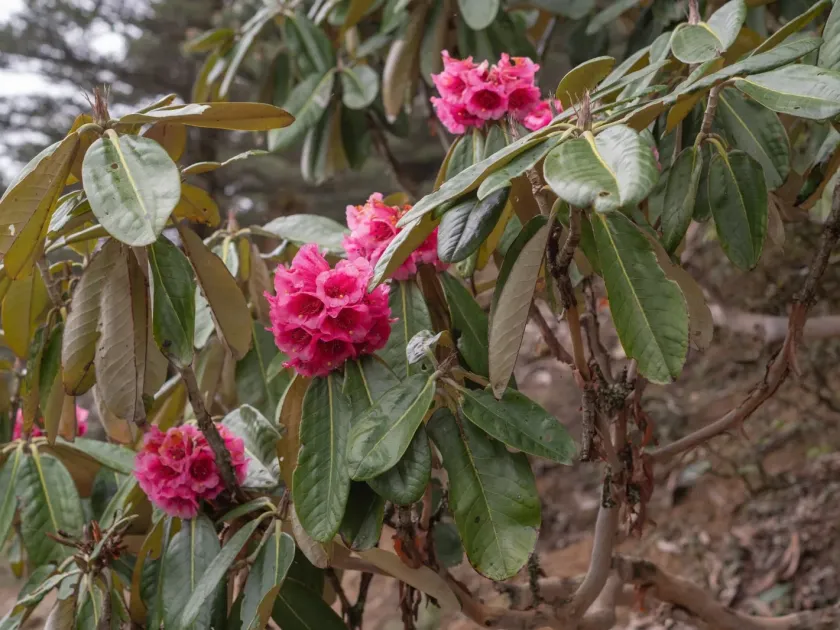
Description
Growing requirements
Rhododendron hodgsonii is a remarkable evergreen shrub or small tree belonging to the Ericaceae family, native to the high-altitude regions of the Himalayas. Its natural range spans across Nepal, Bhutan, and parts of India, where it thrives in moist, cool, and foggy environments.
This species requires specific environmental conditions to prosper, favoring locations with dappled shade. Direct exposure to intense midday sunlight can scorch the leaves and weaken the plant, while strong winds can damage its delicate branches and cause excessive moisture loss.
The soil must be acidic, with an optimal pH range of 4.5 to 5.5. A well-draining, loose, and organic-rich medium is crucial, as the root system of Rhododendron hodgsonii is fibrous and highly susceptible to root rot if waterlogged conditions persist.
Agricultural care focuses on consistent moisture levels. Regular, deep watering with lime-free water is essential throughout the growing season. Mulching with pine needles or bark is highly recommended to protect the roots from temperature fluctuations and to maintain the required soil acidity.
In terms of utilization, Rhododendron hodgsonii is primarily a specimen plant in ornamental horticulture. It is prized for its large, leathery, dark green leaves with silver-grey indumentum on the underside, and its stunning trusses of bell-shaped, magenta to purple flowers.
Main diseases and pests
Phytophthora root rot is the most devastating disease for this shrub, particularly in poorly drained soils. The pathogen infects the root system, causing the plant to wilt and eventually die. Prevention via proper site selection and soil structure is the only effective defense.
The rhododendron lace bug is a common pest that feeds on the undersides of leaves, causing them to develop a mottled, pale appearance. Severe infestations can lead to leaf drop and a significant decline in the overall health and vigor of the plant.
Powdery mildew can occur during periods of high humidity and stagnant air. The white, powdery fungal growth on the foliage can be managed by improving air circulation and applying appropriate fungicides if the infection becomes widespread.
Spider mites are another frequent nuisance, especially in warmer and drier microclimates. These pests thrive in dry conditions and can cause the foliage to become yellow or bronzed, severely impacting the plant's aesthetic and photosynthetic capabilities.
Proper plant hygiene, including the removal of dead or diseased branches and avoiding overhead watering in the late afternoon, is essential to minimize the risk of fungal infections and maintain a healthy environment for the shrub to flourish.