
Farges rhododendron
Rhododendron fargesii
Description
Growing requirements
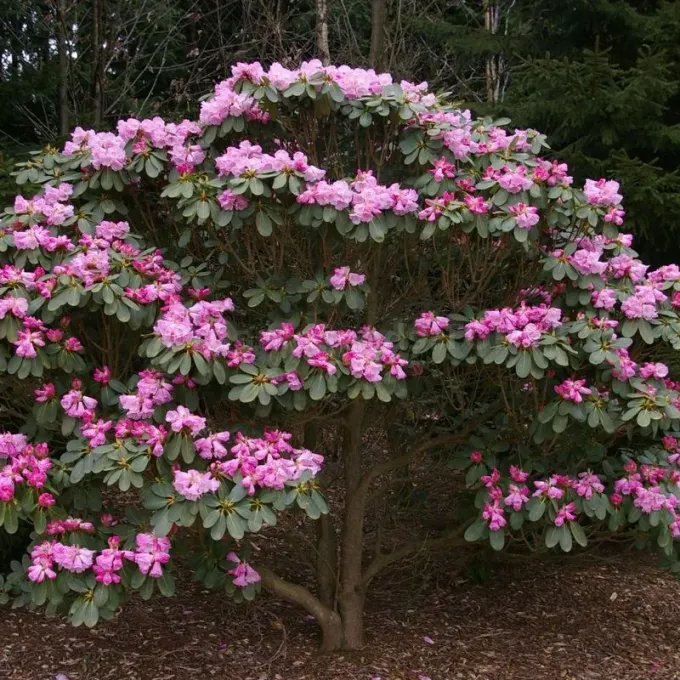
The Farges rhododendron (Rhododendron fargesii) is a beautiful evergreen shrub belonging to the Ericaceae family. It is native to the mountain regions of China, where it thrives in moist, cool forest environments.
For successful cultivation, the plant requires acidic, well-draining soil rich in organic matter. A pH range of 4.5 to 5.5 is essential to ensure that the root system can effectively absorb nutrients.
It prefers locations with dappled shade or partial sun, as direct exposure to harsh midday sun can lead to leaf scorch. Providing a sheltered position against drying winds is also critical for plant longevity.
Consistent watering is necessary throughout the growing season, especially during hot and dry spells. However, it is vital to avoid waterlogged conditions, as poor drainage is the primary cause of root rot.
Mulching the root zone with acidic organic material, such as pine bark or peat, helps retain moisture and regulate soil temperature, creating an environment similar to its natural woodland habitat.
Main diseases and pests
Fungal diseases like Phytophthora root rot pose the most significant threat to this species, usually triggered by waterlogged conditions and poor air circulation around the root collar.
Leaf spot diseases, caused by various pathogens, can affect the foliage during periods of high humidity. Keeping the leaves dry by using drip irrigation is a common preventive measure.
The rhododendron bug is a common pest that feeds on the undersides of leaves, causing them to develop a silvery or yellow appearance and potentially weakening the entire shrub.
Spider mites are another concern, particularly in hotter, drier conditions, which can lead to premature leaf drop if not addressed with appropriate miticides or improved watering practices.
Integrated pest management, including regular monitoring and maintaining overall plant vigor, is essential to minimize the impact of these typical threats on the garden collection.