
Wettstein's Rattle
Rhinanthus wettsteinii
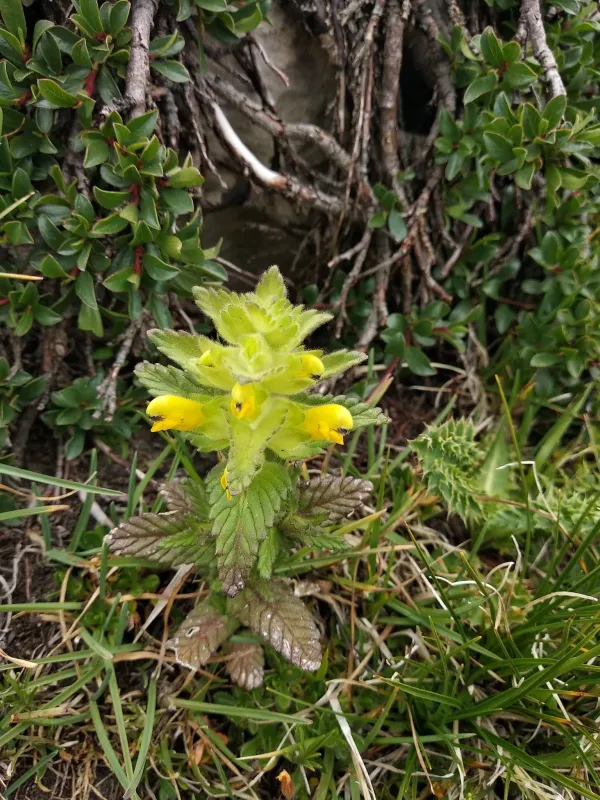
Description
Sowing dates
Sowing should be performed during the late autumn months, as the seeds of Wettstein's Rattle require a period of cold stratification to germinate successfully.
It is best to use freshly harvested seeds for sowing, as the viability of Rhinanthus seeds drops significantly after long-term dry storage.
Seeds should be sown very close to the surface, as they are small and lack the energy reserves to push through deep layers of soil.
Broadcast sowing over existing grassland is the most common method, provided the vegetation is not too dense to prevent seed-soil contact.
Successful establishment depends heavily on the presence of susceptible grass hosts within reach of the emerging seedling's root system.
Growing requirements
Wettstein's Rattle (Rhinanthus wettsteinii) is a species of annual hemi-parasitic plant belonging to the family Orobanchaceae. It interacts with its surroundings by attaching to the roots of grasses and other plants to supplement its mineral intake.
This plant thrives in moist, well-drained meadow soils, where it can establish its root connections with appropriate host grasses efficiently.
Environmental requirements include sufficient exposure to sunlight, as excessive shading by canopy plants drastically reduces the plant's growth vigor.
It prefers a temperate climate with distinct seasonal cycles, which are necessary to break the dormancy of its seeds during the winter months.
In a controlled setting, maintaining a proper ratio between the semi-parasite and its host plants is crucial to avoid detrimental over-parasitism of the meadow ecosystem.
Main diseases and pests
The plant is susceptible to various fungal pathogens, particularly in areas with poor airflow or chronically waterlogged soil conditions.
Powdery mildew can severely affect the foliage, reducing the photosynthetic area and leading to poor seed set at the end of the season.
Insect pests that target Rhinanthus species include several specialized butterfly and moth larvae that feed on the developing flower buds.
Soil-borne pests like wireworms may disrupt the connection between the parasite and the host, leading to the early senescence of the plant.
Preventative measures focus on maintaining balanced meadow moisture and ensuring timely harvesting to reduce the accumulation of pathogen spores.
Harvesting
Harvesting of the seeds should occur when the seed capsules have turned brown but before they have naturally dehisced to scatter their contents.
For forage production, the optimal harvest timing coincides with the late flowering phase to maximize the nutritional value of the harvested meadow hay.
Mechanical harvesting requires careful calibration of equipment to ensure that the delicate capsules are not destroyed during the process.
After collection, the seeds must be dried in a well-ventilated, cool place to prevent mold development and loss of metabolic viability.
Strategic harvesting cycles help in sustaining the population of Wettstein's Rattle within a meadow for successive growing seasons.