
Yellow rattle
Rhinanthus angustifolius
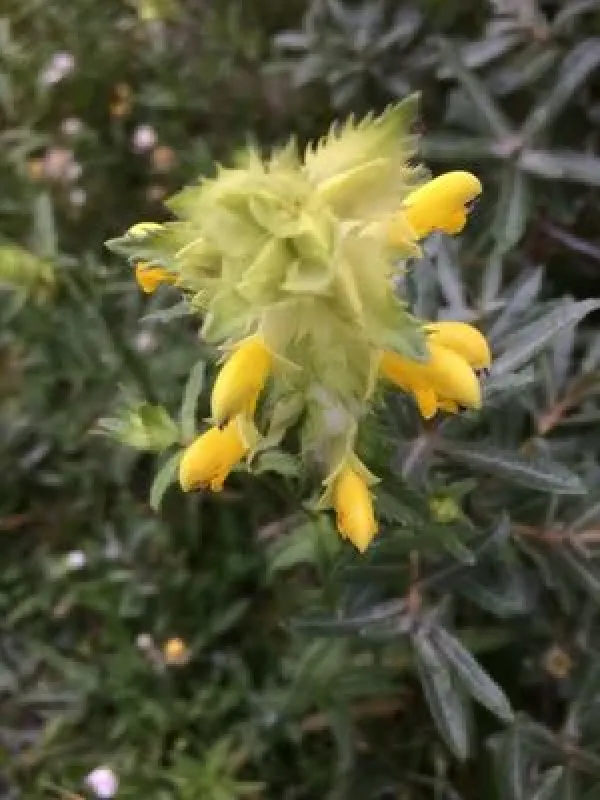
Description
Sowing dates
Germination of Rhinanthus angustifolius occurs in early spring. The seeds require a period of cold stratification over winter to break dormancy, ensuring that seedlings emerge when host plants are already established.
Management in agricultural settings focuses on preventing seed dispersal. Mowing the meadow before the plants set seed is the primary method to control their population density in future seasons.
If allowed to mature, each plant can produce hundreds of seeds. These seeds are easily dispersed by wind, farm machinery, or during the transport of infested hay to other parts of the field.
Strategic grazing practices can also be used to manage populations. Ensuring that livestock graze the area before the yellow rattle sheds its seeds is effective in reducing the long-term seed bank.
The success of control measures relies on the persistent removal of mature plants over several consecutive years, as the seed bank can persist in the soil for a prolonged period.
Growing requirements
Yellow rattle (Rhinanthus angustifolius) is an annual hemiparasitic plant from the Orobanchaceae family. It is distinct for its ability to derive nutrients and water by attaching its roots to the root systems of nearby grasses and legumes.
The plant thrives in temperate climates, specifically in grasslands, meadows, and pastures. It prefers open, sunny locations where it can effectively access the root systems of host plants without severe competition for light.
Soil requirements are relatively modest, as the plant compensates for nutrient deficits by parasitizing its neighbors. It performs well on various soil types, provided there is enough moisture during the germination period.
Historically, this species is widespread across Europe and parts of Asia. It has become a subject of interest in modern grassland conservation due to its unique role in controlling aggressive grasses and enhancing floral diversity.
Ecologically, the plant acts as a natural regulator of grassland density. In agricultural terms, however, its presence is often viewed as a sign of decreasing forage quality and yield potential.
Main diseases and pests
The main agricultural threat posed by yellow rattle is its parasitic impact on forage grasses. By siphoning off resources, it significantly reduces the biomass of productive grasses in pasturelands.
Its presence is often correlated with a decrease in the feeding value of hay. When present in high densities, it can compete with valuable crops, leading to lower yield outputs for farmers.
The plant is susceptible to certain fungal infections, such as rusts and powdery mildews. While these diseases can damage the plant, they rarely eradicate it from an infestation site.
Seed contamination is a major risk factor. Hay harvested from infested areas may contain seeds, which can lead to the unintended spread of the parasite to unaffected grazing lands or cultivated meadows.
Integrated management is necessary because excessive reliance on one method can fail to control the seed bank. A combination of early mowing and proper nutrient management is the most effective approach.