
Remusatia vivipara
Remusatia vivipara
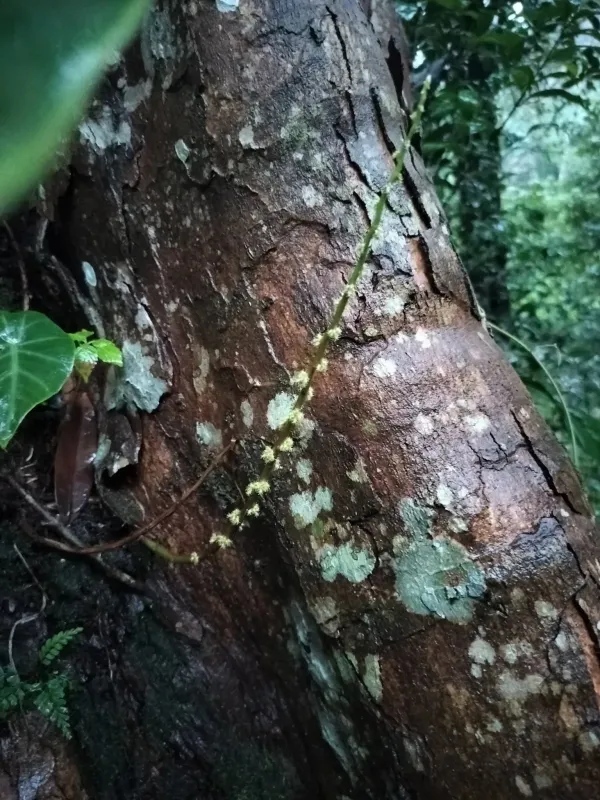
Description
Growing requirements
Remusatia vivipara is a fascinating perennial herb belonging to the Araceae family. Native to tropical and subtropical regions across Asia, Africa, and Australia, it is commonly found growing on rocky outcrops or as an epiphyte on trees within humid forest environments.
The plant is biologically distinguished by its unique tuberous rhizomes and its remarkable method of reproduction. It produces specialized bulbils on long, slender stalks, which serve as vegetative propagules, allowing the plant to colonize new substrates efficiently.
Cultivation requires specific environmental conditions that mirror its natural habitat. It thrives in well-draining, humus-rich soil that mimics the organic layer of forest floors, requiring careful management to avoid waterlogged conditions which can prove fatal to the tubers.
Climatic requirements involve stable tropical temperatures, ideally between 20°C and 25°C during the growing season. The plant follows a distinct dormant cycle where the foliage dies back, and the tubers must be kept in a cooler, dry environment to survive and prepare for the next growth spurt.
In terms of agricultural and horticultural utility, it is primarily grown for its ornamental value in specialty collections. Its rarity and bizarre reproductive habits make it a subject of significant interest for botanical gardens and enthusiasts focusing on the diversity of the aroid family.
Main diseases and pests
The primary threats to this culture in controlled environments include fungal root rot, which typically develops during the dormant phase if the soil remains excessively moist. Common pests such as spider mites, mealybugs, and scale insects may also infest the plant, necessitating regular monitoring.