
Reboulia hemisphaerica
Reboulia hemisphaerica
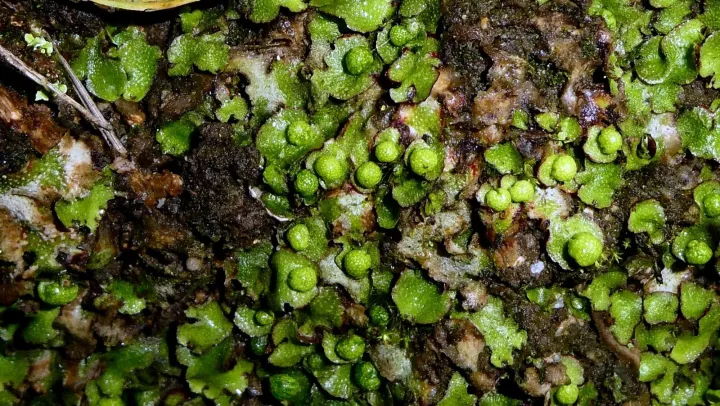
Description
Growing requirements
Reboulia hemisphaerica is a classic representative of the Marchantiaceae family, known as a thalloid liverwort. Unlike vascular plants, it lacks true roots, utilizing instead a specialized thallus structure to anchor onto moist surfaces such as limestone or damp soil.
The environmental requirements of this species are centered on constant humidity and stable soil moisture. It thrives in shaded microhabitats where water evaporation is limited, often colonizing rocky crevices or stream banks where seepage maintains a consistent moisture supply.
Regarding light conditions, the plant is adapted to partial shade. Exposure to intense, direct sunlight leads to rapid desiccation of the thallus, while complete darkness inhibits the photosynthetic processes necessary for the development of the reproductive sporophyte phase.
Soil composition plays a critical role in the distribution of this species. It prefers base-rich substrates, particularly those derived from limestone, which provide the essential nutrients and pH levels required for the colonization and expansion of the moss colony.
The geographical range of the plant is vast, covering temperate regions across the Northern Hemisphere. It exhibits significant physiological plasticity, allowing it to remain dormant during dry spells and regenerate quickly once sufficient water becomes available in the environment.
Main diseases and pests
Habitat loss due to urbanization and the destruction of rocky outcrops are the primary threats to the long-term survival of Reboulia hemisphaerica populations.
Chemical contamination, specifically the runoff of nitrogen-based fertilizers from nearby agricultural fields, can lead to the rapid decline of sensitive bryophyte communities.
Competition with faster-growing vascular plants often results in the displacement of this liverwort, as these plants capture available sunlight and shade out the smaller moss species.
Various microscopic fungal pathogens can attack the thallus under conditions of poor air circulation and excessive standing water, leading to localized rotting.
Grazing by local fauna, including slugs and certain insect larvae, can severely limit the growth of the thallus, particularly during the critical stages of spore production.