
Raphidocelis subcapitata
Raphidocelis subcapitata
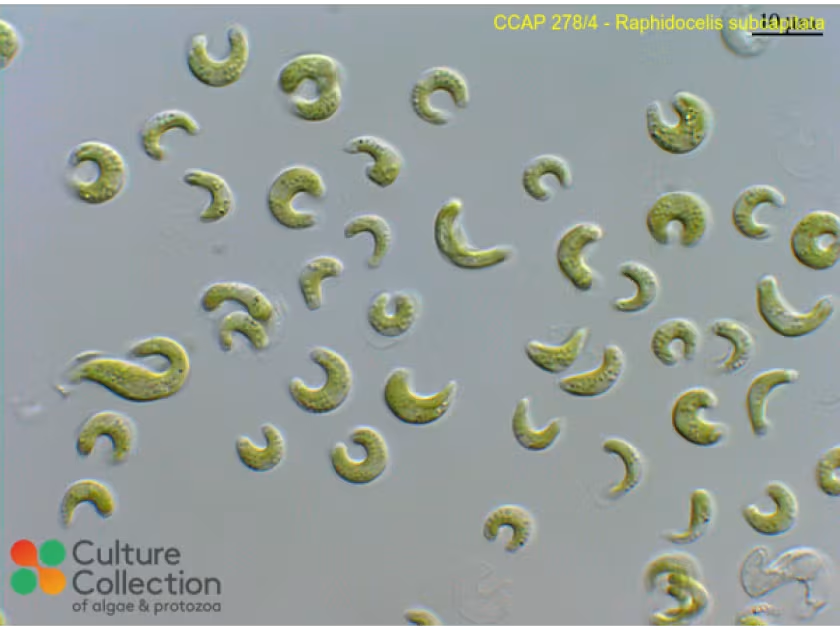
Description
Growing requirements
Raphidocelis subcapitata is a species of unicellular green algae belonging to the family Selenastraceae. Formerly known under various names, including Pseudokirchneriella subcapitata, it serves as a globally recognized model organism for aquatic toxicity testing.
The natural habitat of this species includes a wide range of freshwater ecosystems. It is highly adaptable to various environmental conditions, making it an excellent candidate for both field studies in ecology and controlled laboratory experiments in biotechnology.
Cultivation requirements involve specific growth media, such as those recommended by the OECD for ecotoxicological testing. Maintaining an optimal temperature range of 20 to 25 degrees Celsius is essential for the rapid multiplication of cell populations in biomass production.
To ensure high productivity, the culture requires consistent light exposure and gas exchange, usually facilitated by constant stirring or aeration within a photobioreactor. Adequate nutrient supply, specifically nitrogen and phosphorus, is critical for achieving exponential growth phases.
Industrially, this alga is not a crop in the traditional agricultural sense, but it is an essential biological tool. It is used to monitor the impact of agricultural runoff and chemical pollutants on aquatic systems, directly contributing to the safety and health of the wider agricultural environment.