
Ranzania japonica
Ranzania japonica
Description
Growing requirements
Ranzania japonica is a distinctive genus of herbaceous perennials within the Berberidaceae family. Originating from the mountainous regions of Japan, this plant thrives in cool, humid forest environments, making it a prized specimen for specialized woodland gardens.
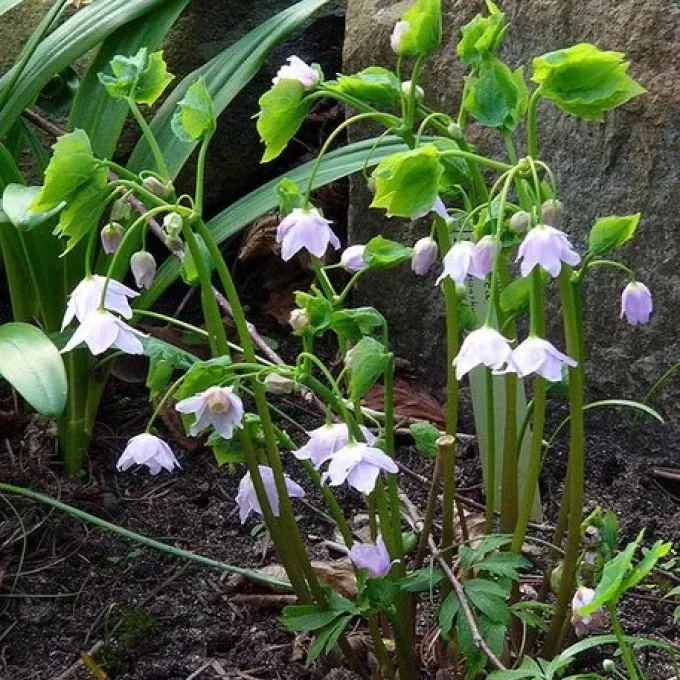
Botanically, the plant is known for its elegant foliage and bell-shaped, delicate lavender flowers. It typically reaches a height of 20 to 40 centimeters, forming clumps that look best in naturalistic garden settings or rock gardens designed for shade-loving species.
Successful cultivation requires specific environmental conditions, primarily deep or dappled shade. Exposure to intense sunlight, particularly in the afternoons, should be strictly avoided as it causes rapid desiccation of the thin, delicate foliage characteristic of this species.
The soil must be rich in organic matter, loose, and well-draining, with a slightly acidic pH. While the plant appreciates consistent moisture, it is highly sensitive to waterlogged conditions, which can lead to rapid root rot if the substrate does not drain freely.
Regarding climatic needs, this species prefers cool summer conditions and protection from harsh, drying winds. Mulching with organic material such as leaf mold is essential to keep the soil temperatures low and maintain the moisture levels required for healthy vegetative growth.
Main diseases and pests
Fungal infections and root rots are the most significant threats to Ranzania japonica, especially in regions with poorly aerated or overly dense soils. Proper drainage and site selection are the primary defense mechanisms against these soil-borne pathogens.
Pests, most notably slugs and snails, are highly attracted to the tender leaves of this plant during the early growth stages in spring. Protective measures, including barriers or environmentally sound control methods, are often required to prevent severe defoliation of the plants.