
Raffia palm
Raphia farinifera (Gaertn.) Hyl.
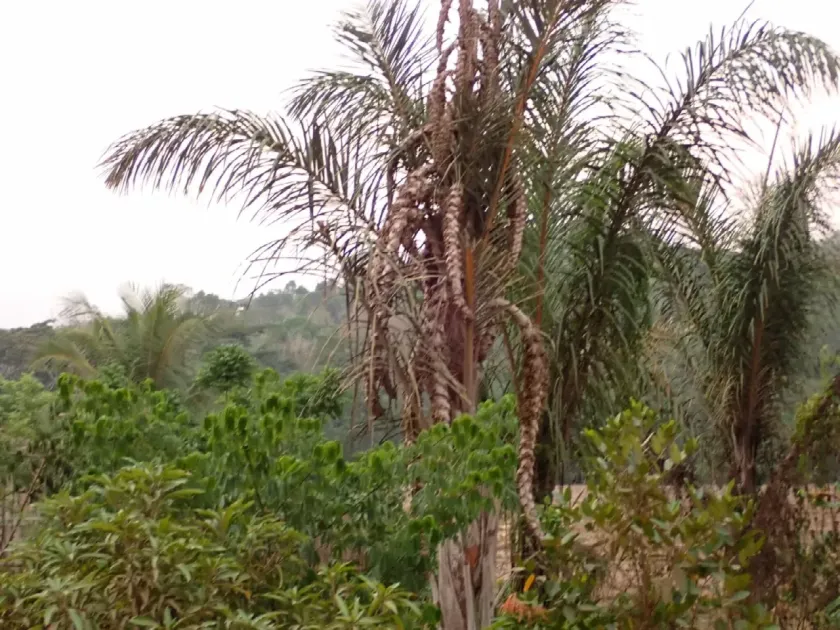
Description
Sowing dates
Raphia farinifera propagates primarily through seeds, which require specific moist conditions to maintain their viability and ensure germination.
The seeds possess a natural dormancy period and must be sown immediately after maturation to prevent desiccation of the embryo.
In nursery environments, seeds are kept in a warm, high-humidity medium to replicate the natural swampy habitat of the species.
Germination success is closely linked to temperature regulation, ideally maintained between 25°C and 30°C throughout the initial growth phase.
Seedlings are extremely delicate and require protection from intense direct sunlight and wind until they develop a robust root system.
Growing requirements
The Raffia palm belongs to the Arecaceae family and is native to tropical wetlands, riverbanks, and swampy areas of Africa and Madagascar.
The plant demands deep, organic-rich soil with constant water availability, tolerating and even thriving in periodically flooded conditions.
It flourishes in tropical climates characterized by high annual rainfall, high relative humidity, and the absence of distinct cold or dry seasons.
Agronomically, it requires significant space as the palm grows to a considerable height and produces massive, long compound leaves.
While the main stem is monocarpic and dies after flowering, the plant produces suckers from the base, ensuring the continuity of the plantation.
Yield
The primary economic output of this palm is the high-quality fiber extracted from the epidermis of the young, unopened leaf fronds.
The yield of fiber is determined by the density of the palms per hectare and the frequency of harvesting, which encourages vegetative regeneration.
The tree also provides starch from its inner trunk tissue, which serves as a supplemental food source for local communities in native regions.
Production efficiency depends on the expertise of the harvesters in selecting the optimal leaves without hindering the palm's ongoing growth cycle.
Proper post-harvest treatment, including careful fiber separation and controlled drying, is essential for maintaining the material's market value.
Main diseases and pests
The Raffia palm is susceptible to various fungal pathogens that thrive in its humid, swampy environment, affecting both roots and leaves.
Palm weevils are among the most significant pests, often boring into the growth point and leading to the collapse of the stem.
Nutrient deficiencies or improper soil aeration can weaken the plant's natural defense systems, making it more prone to secondary infections.
Environmental stress, such as prolonged drought or extreme water pollution, can negatively impact the plant's health and fiber quality.
Management practices focus on monitoring the plantations for pest infestations and implementing systematic clearing of dead or diseased biomass.
Harvesting
Harvesting involves the manual stripping of the thin, flexible epidermal layer from the young, tightly folded leaflets before they unfurl.
The process requires great care to avoid damaging the palm’s central spear, ensuring that the plant continues to produce new leaves throughout its life.
Once harvested, the raw fibers are sun-dried to enhance their durability, pale color, and resistance to environmental degradation.
The product is then bundled and graded based on length and quality, serving as a vital material for weaving, packaging, and garden ties.
Since the palm grows throughout the year in tropical conditions, harvesting is a continuous activity that supports local livelihoods year-round.