
Flat-leaved liverwort
Radula complanata
Description
Growing requirements
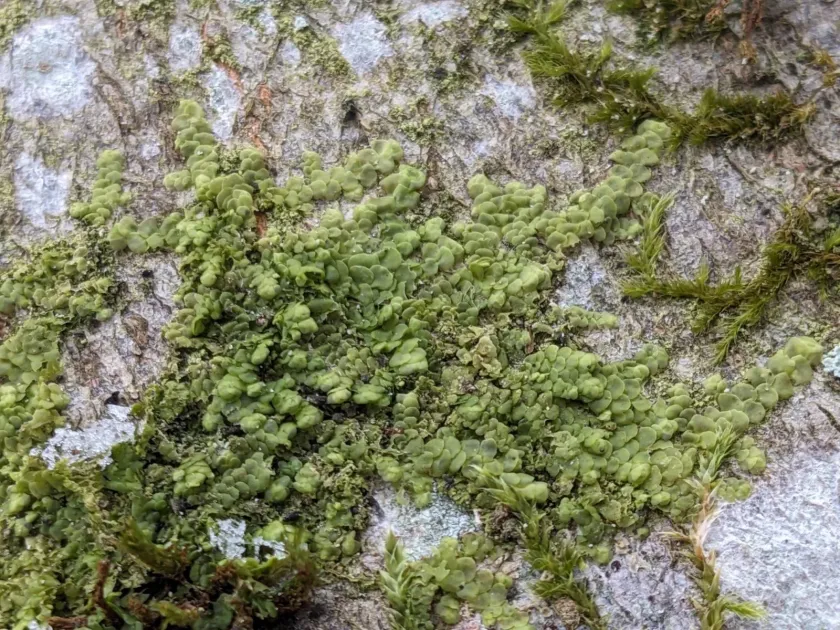
Radula complanata, commonly known as the flat-leaved liverwort, is a species of liverwort belonging to the Radulaceae family. It is an epiphytic plant that primarily grows on the bark of deciduous trees, forming distinctive, closely appressed patches.
The plant is widely distributed throughout the temperate zones of the Northern Hemisphere. Its preference for specific tree barks makes it a significant component of forest ecosystems, where it contributes to the complex micro-habitats found on trunks and branches.
Botanically, it is recognized by its flat, prostrate shoots and overlapping leaves that provide a streamlined appearance to withstand wind and water flow. The plant adheres to its substrate through rhizoids, which allow it to absorb moisture directly from the humid air.
Growth requirements are strictly dependent on consistent moisture and moderate light levels. It thrives in humid forest conditions where the canopy provides partial shade, protecting the colony from direct desiccation and maintaining stable temperatures.
While not a crop in the traditional agricultural sense, Radula complanata serves as a bioindicator. Its sensitivity to sulphur dioxide and other pollutants means that its decline or absence in a region often correlates with poor air quality and environmental degradation.