
Mongolian oak
Quercus mongolica Fisch. ex Ledeb.
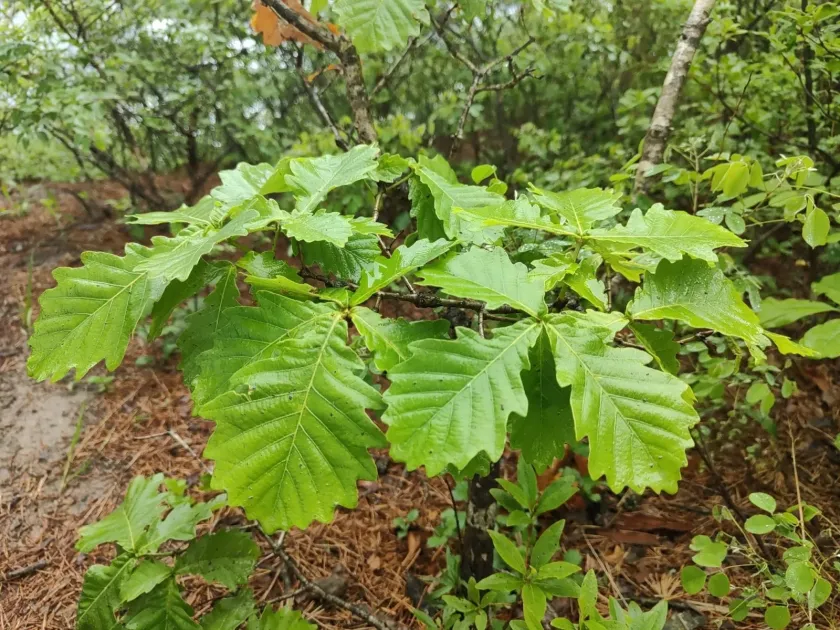
Description
Sowing dates
Sowing of Mongolian oak seeds is usually performed in autumn, immediately after the acorns are harvested, as they quickly lose viability when dried. Autumn sowing allows seeds to undergo natural stratification in the soil during the winter period.
For spring sowing, acorns must be stored at low temperatures and moderate humidity, for example, in a cellar or refrigerator in boxes with damp sand. The planting depth is typically 5 to 7 centimeters to ensure optimal germination conditions.
For establishing forest plantations, both direct seeding and planting of one- or two-year-old seedlings grown in nurseries are used. Young plants require protection from rodents that often eat acorn caches in the soil.
The sowing pattern in nurseries is calculated based on the need to provide sufficient growing area for the formation of a robust root system. Spacing of up to 1 meter between rows is usually left to allow for mechanized maintenance operations.
An important factor during sowing is the control of substrate moisture: waterlogging leads to embryo rot, while a lack of moisture causes premature drying and death of the planting material.
Growing requirements
Mongolian oak belongs to the Fagaceae family and is a typical representative of the broad-leaved forests of East Asia. The crop prefers moderately moist, fertile loamy soils with good aeration.
The tree is characterized by high winter hardiness and the ability to withstand extremely low temperatures typical of a continental climate. It is more frost-resistant than many European oak species, making it valuable for colder regions.
The species has moderate requirements for light: at a young age, Mongolian oak can tolerate some shading, but for full growth and crown development in adulthood, an open, sunny location is required.
Optimal growth conditions include protection from strong winds and the presence of a sufficient snow cover in winter. The crop is sensitive to severe soil compaction, so it is important to avoid overgrazing or excessive heavy machinery use in silviculture.
Regarding soil acidity, Mongolian oak prefers neutral or slightly acidic environments. Growth slows down in waterlogged areas, so drainage properties must be considered when establishing plantations.
Yield
The economic use of Mongolian oak is primarily aimed at obtaining high-quality wood, which is characterized by high strength, hardness, and decay resistance. The wood is widely used in furniture manufacturing and construction.
Biomass growth in this species occurs more slowly than in coniferous crops, but the wood quality makes its cultivation economically viable in the long term. The rotation cycle in forestry typically spans several decades.
In addition to timber, acorns have value as a food source for wildlife and livestock. In some regions, oak stands are also significant as honey-producing areas and essential components of local biodiversity.
The biological productivity of the stands depends on planting density and the quality of maintenance in the early stages. Thinning helps redistribute resources to the most viable specimens, increasing the marketable timber yield.
An important direction for use is land reclamation: Mongolian oak effectively strengthens the soil layer and increases the resistance of ecosystems to erosion, performing vital ecological functions.
Main diseases and pests
Among the typical diseases, powdery mildew is prevalent, affecting the foliage in hot and humid periods, as well as various types of bark necrosis and stem rot resulting from mechanical damage to the tree.
Pests that pose the greatest danger to Mongolian oak include leaf-eating insects such as oak leaf rollers and silkworms. Outbreaks of mass reproduction of these insects can lead to significant defoliation of the trees.
Bark beetles and longhorn beetles often attack weakened trees by penetrating the cambial layer. Regular sanitary monitoring of the stands allows for the timely identification of infected specimens and the implementation of thinning operations.
To prevent the spread of infections, it is important to follow agricultural standards: remove dead wood in a timely manner, avoid the accumulation of plant debris, and conduct preventive spraying in nurseries when necessary.
- Powdery mildew
- Oak leaf roller
- Bark beetles
- Bark necrosis