
Brewer's oak
Quercus garryana Douglas ex Hook. var. breweri (Engelm.) Jeps.
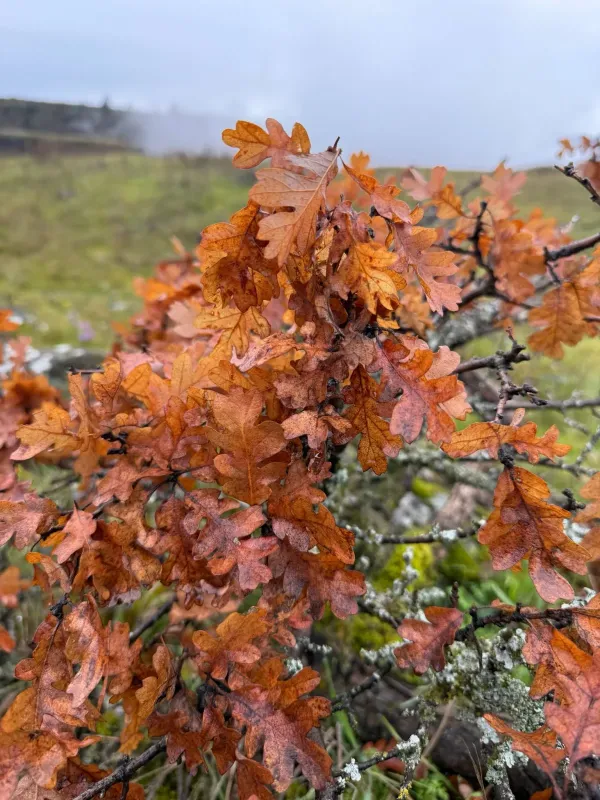
Description
Sowing dates
Propagation of Brewer's oak is primarily achieved through acorns, which should be planted shortly after harvest as they rapidly lose viability when dried out.
For nursery production, acorns should be stratified in a moist medium at low temperatures (around 4°C) for approximately 60 to 90 days before sowing.
Seeds are typically sown at a depth of 3–5 cm in well-draining soil to ensure the taproot can establish itself deep within the substrate without hindrance.
Spring germination is standard, provided the soil has warmed up, and moisture levels are kept consistent but not excessive to prevent seed rot.
Initial growth is notably slow, as the seedling prioritizes root development over stem elongation, which is an adaptive strategy for its native arid habitats.
Growing requirements
This variety, a member of the Fagaceae family, is highly specialized for dry, rocky sites where other species struggle to compete for limited water resources.
It thrives in full sunlight and requires open spaces, as it is highly intolerant of shade and will show poor structural growth if blocked by neighboring trees.
Soil requirements are relatively flexible, though the species excels in rocky or gravelly soils with excellent drainage and a neutral to slightly acidic pH.
The tree is remarkably drought-tolerant once established, surviving in environments with long dry summers and relying on its deep root system.
Climatic preferences include temperate conditions with enough winter precipitation to support early spring growth, followed by a dry summer dormancy.
Main diseases and pests
Young saplings are highly vulnerable to browsing by deer and small rodents, which often necessitates the use of protective fencing or mesh guards.
Powdery mildew can affect the foliage during humid seasons, especially in areas where air circulation is restricted or density is too high.
Root rot, specifically caused by Phytophthora species, is a potential threat if the soil remains waterlogged for extended periods during the growing season.
Various gall-forming insects and leaf-miners are common but rarely cause fatal damage to mature, healthy specimens growing in suitable conditions.
Fire management is essential; while the species is fire-adapted, excessive frequency of wildfires can prevent young oaks from reaching reproductive maturity.