
Albanian pasqueflower
Pulsatilla albana
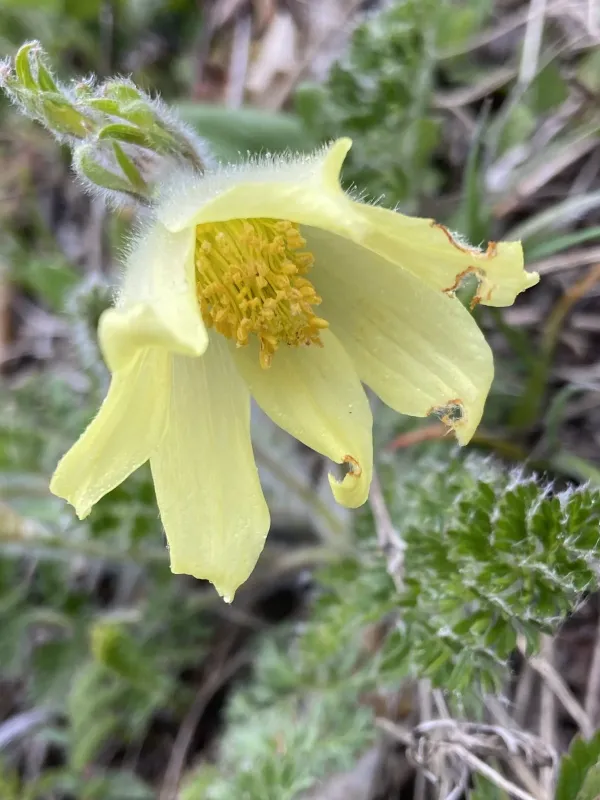
Description
Sowing dates
Sowing of Pulsatilla albana is most successful when performed immediately after seed harvest in the summer, as the seeds lose viability quickly during storage.
Alternatively, seeds can be sown outdoors in late autumn, allowing for natural winter stratification, which is essential for uniform germination in early spring.
When using seed trays, a well-draining, gritty compost is recommended to mimic the natural alpine conditions required by the developing seedlings.
Seeds should be covered only lightly with a thin layer of sand or grit, as they require a certain amount of light exposure to trigger the germination process.
Seedlings should be handled with extreme care when pricking out, as the plant develops a deep taproot that is highly susceptible to disturbance and transplant shock.
Growing requirements
As a member of the Ranunculaceae family, the Albanian pasqueflower thrives in environments that replicate its native rocky and mountainous habitats of the Caucasus.
It is an obligate sun-loving plant that requires full exposure to solar radiation to maintain its compact habit and produce abundant, healthy flowers.
The soil must be exceptionally free-draining; heavy clay soils are unsuitable and will almost certainly lead to the death of the crown during dormant periods.
Pulsatilla albana performs best in poor, slightly alkaline to neutral mineral-rich soils that provide stability but do not retain excessive moisture.
The species is remarkably cold-hardy, yet it necessitates protection from excessive winter wetness, which is far more detrimental to its survival than frost.
Main diseases and pests
The primary threat to this plant is root rot caused by stagnant water, especially in the winter months when the plant is in its dormant, low-metabolism phase.
Gray mold (Botrytis) can develop on foliage if air circulation is poor or if the plant is situated in a high-humidity, low-light microclimate.
Slugs and snails are major pests that can devour emerging floral buds and foliage, sometimes destroying an entire plant within a single night in spring.
Aphids can occasionally cluster on the developing flower stems, leading to stunted growth and diminished aesthetic value of the characteristic blooms.
Maintaining a clean, weed-free environment around the base of the plant is vital to improve airflow and reduce the likelihood of pest and disease outbreaks.