
Ptychomitrium polyphyllum
Ptychomitrium polyphyllum
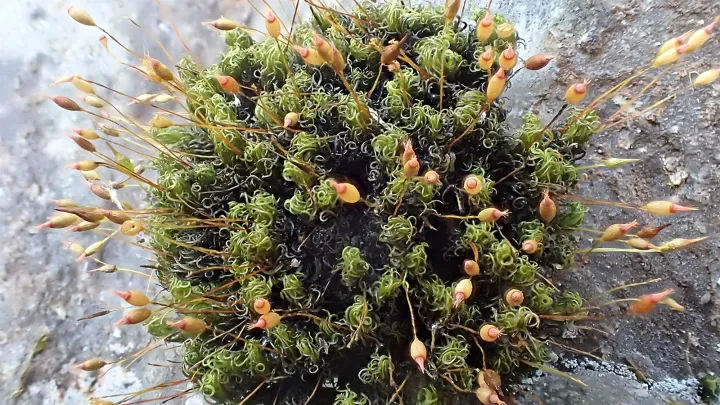
Description
Growing requirements
Ptychomitrium polyphyllum is a moss species belonging to the family Ptychomitriaceae. While not a conventional agricultural crop, it is a significant species in bryology, often studied for its resilience in extreme, low-nutrient environments.
This species is predominantly a lithophyte, meaning it grows on rocky substrates. It prefers acidic rocks such as granite or schist, forming dark, compact tufts that are visually distinctive in mountain and coastal regions throughout Western Europe.
The distribution of this moss is heavily influenced by temperate oceanic climates. It requires consistent humidity and clean, unpolluted air to thrive, which is why it is often found in sheltered, moist mountain valleys or coastal cliffs where atmospheric moisture is high.
Botanically, it features densely leafy stems and specialized structures for spore production. Its leaves are structurally adapted to retain moisture, allowing the plant to enter a dormant state during dry spells and rapidly resume metabolic activity when moisture returns.
The soil or substrate requirements are very specific: it thrives on acidic surfaces and is highly intolerant of limestone or nutrient-rich soils. It lacks a complex root system, relying instead on its surface area to absorb essential water and nutrients directly from rain and mist.
Main diseases and pests
Air pollution is the primary threat to the health of Ptychomitrium polyphyllum populations. As a bioindicator, it reacts negatively to sulfur dioxide and nitrogen oxides, which damage its delicate tissues and prevent successful reproduction.
Climate change poses a significant risk, particularly the increase in frequency of prolonged drought periods. Although the moss is adapted to temporary desiccation, persistent lack of water eventually leads to the death of the entire colony.
Habitat destruction remains a pressing issue, as human activity, such as quarrying or urban development on rocky outcrops, directly eliminates its colonization sites. The plant cannot easily migrate to new areas due to specific substrate needs.
Competition from vascular plants and larger moss species can occur if the substrate begins to accumulate organic matter. Once a thin layer of soil forms, the specialist environment preferred by Ptychomitrium polyphyllum disappears, leading to displacement.
While the moss does not suffer from traditional pests, fungal outbreaks during abnormally warm and stagnant moisture conditions can weaken the plants. These infections typically remain localized but can expand if the surrounding ecosystem is already under stress.