
Azure grape hyacinth
Pseudomuscari azureum
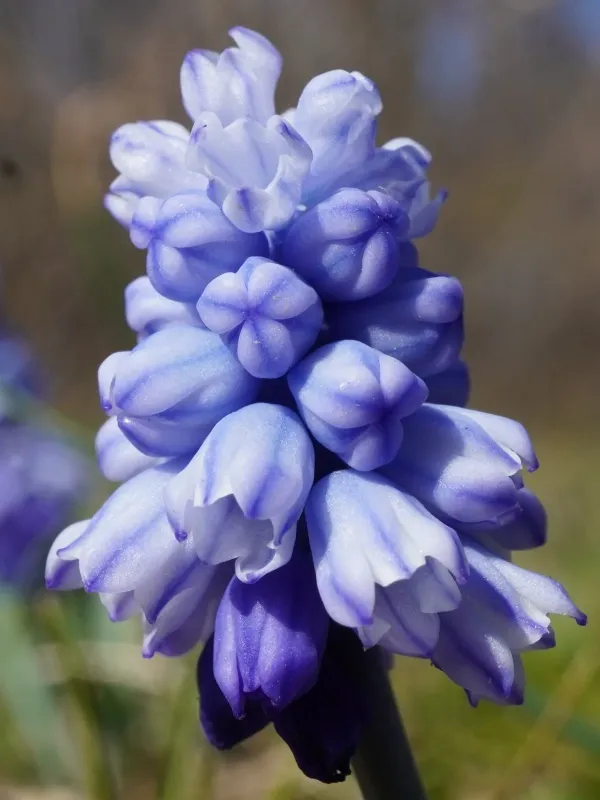
Description
Sowing dates
Planting of Pseudomuscari azureum bulbs is best performed in the autumn months, typically September or October, to allow for proper rooting before soil freezing.
The bulbs should be planted at a depth of approximately 7 to 10 centimeters, ensuring they are positioned upright to facilitate efficient sprout emergence.
For optimal visual impact, bulbs should be spaced 5 to 10 centimeters apart, which supports the formation of dense, carpet-like flowering patches.
Propagation is primarily achieved through the division of offsets, which are small daughter bulbs that develop around the main mother bulb over time.
Seed-based propagation is a secondary method that requires significant patience, as flowering typically does not occur until several years after sowing.
Growing requirements
This species belongs to the Asparagaceae family and is native to mountainous regions of Turkey, adapted to cool and moist spring environments.
The culture thrives in full sun but maintains good performance in partial shade, particularly when planted under the canopy of deciduous shrubs or trees.
Soil requirements dictate the necessity for excellent drainage, as the bulbs are highly susceptible to rot if left in waterlogged conditions during dormancy.
Ideal soil is light, well-structured, and rich in organic matter with a neutral to slightly alkaline pH, which promotes healthy root system development.
Regular moisture is critical during the active growth and flowering phase, but the site should be kept relatively dry during the summer rest period.
Main diseases and pests
Botrytis, or gray mold, is a primary concern for this crop, especially in seasons characterized by high humidity and poor ventilation among the foliage.
Fungal diseases such as Fusarium wilt can significantly impact bulb health if the planting site lacks proper drainage or if contaminated bulbs are used.
Pests like onion flies and bulb mites pose a direct threat by feeding on the bulb tissues, leading to stunted growth or total plant failure.
Small rodents and voles represent a major threat during the winter months, as they frequently consume stored or newly planted bulbs in the garden.
Integrated pest management, including prophylactic fungicide treatment of bulbs before planting, is essential for maintaining a healthy stand.
Harvesting
Azure grape hyacinth is utilized primarily in decorative landscaping, serving as a popular choice for rock gardens and naturalized bulb displays.
Harvesting of the vegetative material, specifically the bulbs, should only be done after the foliage has fully withered and turned yellow naturally.
The cut flowers are occasionally used in small spring arrangements, though they are most valued for their aesthetic role in the garden landscape.
Bulbs rarely need lifting unless the clump becomes overcrowded or if site relocation is necessary to prevent competitive resource depletion.
Once lifted, bulbs should be cured in a cool, dark, and well-ventilated area until replanting, ensuring they remain dry to avoid fungal deterioration.