
Pseudocherleria imbricata
Pseudocherleria imbricata
Description
Growing requirements
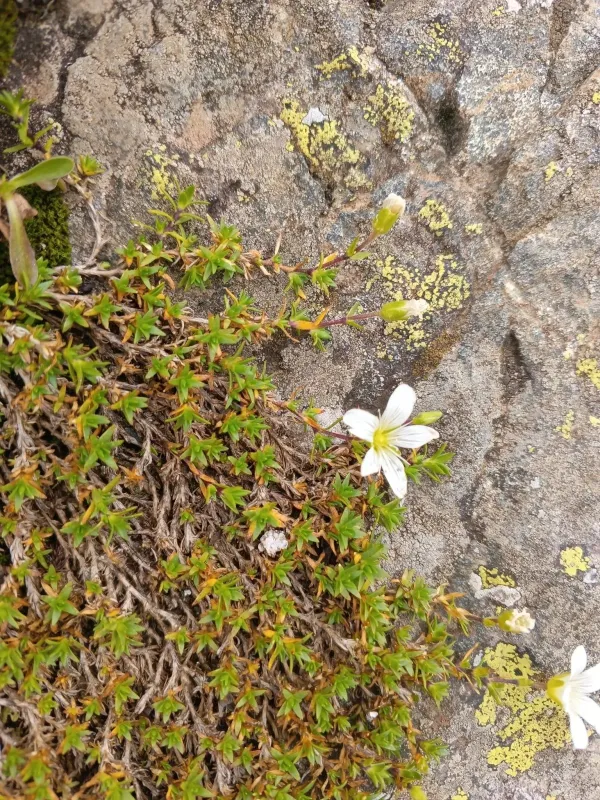
Pseudocherleria imbricata, a member of the Caryophyllaceae family, is a distinct perennial herb primarily native to the Caucasus mountain range. This species has evolved to thrive in high-altitude environments, often settling in stony screes and rock crevices where few other plants can establish a root system.
The plant exhibits a characteristic cushion-forming growth habit, which is a vital adaptation to survive extreme alpine climates. Its stems are tightly packed with small, imbricate (overlapping) leaves that help reduce water loss and provide protection against mechanical damage caused by wind-blown debris.
To cultivate this species successfully, it is essential to provide environmental conditions that mirror its natural alpine habitat. This includes a position in full sun, coupled with a well-draining, mineral-rich substrate that does not retain excessive moisture for prolonged periods.
Regarding soil requirements, Pseudocherleria imbricata prefers nutrient-poor, gritty, and alkaline-to-neutral soil. The use of traditional fertilizers should be avoided, as the plant is slow-growing and high nitrogen levels can compromise its compact habit and natural hardiness.
The primary use of this plant is within specialized rock gardening and alpine displays. It is highly regarded by horticulturists for its architectural form and ability to endure harsh conditions, serving as a focal point in specialized rockeries and crevice gardens.
Main diseases and pests
The most significant threats to Pseudocherleria imbricata are related to moisture management, specifically fungal diseases such as root rot or crown rot caused by poor soil drainage. High humidity combined with warm temperatures often leads to rapid decay of the central cushion.
Insect pests are generally less common for this species in natural settings, but in artificial environments, aphids can occasionally infest the flower stalks. Slugs and snails may also present a nuisance by grazing on the foliage, requiring physical barriers to protect the plant structure.