
Psammagrostis wiseana
Psammagrostis wiseana
Description
Growing requirements
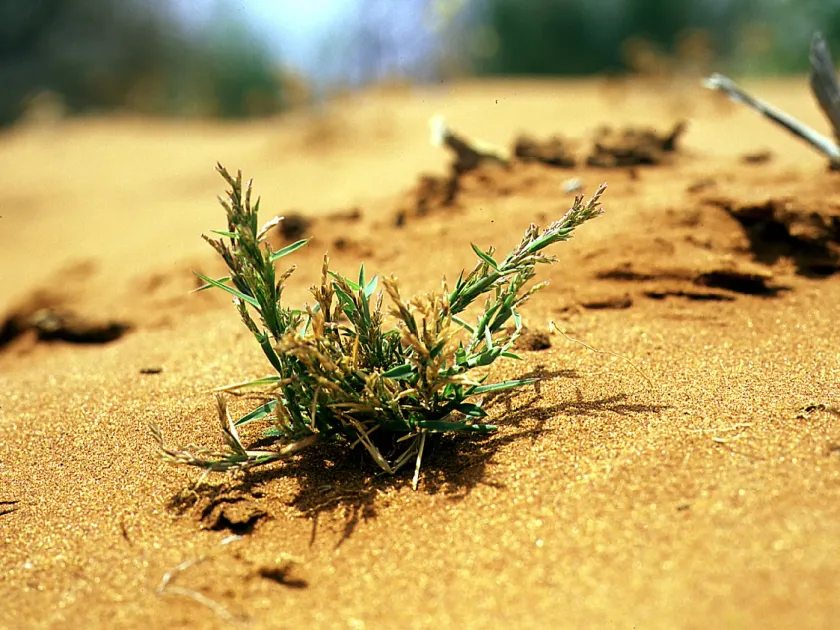
Psammagrostis wiseana is a distinctive perennial grass species belonging to the Poaceae family. Native to Australia, this plant is specifically adapted to the harsh, arid environments of the continent's desert regions.
The crop is known for its remarkable ability to thrive in sandy soils with minimal nutrient content. It functions as a natural soil binder, utilizing its extensive root system to stabilize shifting dunes and prevent wind-driven erosion in sensitive ecosystems.
Climate requirements for this species are centered around extreme heat and low precipitation levels. It thrives in well-drained, porous environments where standing water is absent, reflecting its evolutionary strategy to survive in intense solar exposure.
Botanically, it grows in dense tufts that help conserve moisture. Its leaves are structurally rigid and narrow, minimizing surface area for transpiration and providing resistance against the harsh mechanical stress of desert windstorms.
From an agricultural and environmental perspective, this grass is valued for its potential in land reclamation and desertification control. While not typically cultivated on an industrial scale, its role in maintaining ground cover in hyper-arid zones is essential for local biodiversity and land management.