
Protorhus longifolia
Protorhus longifolia
Description
Growing requirements
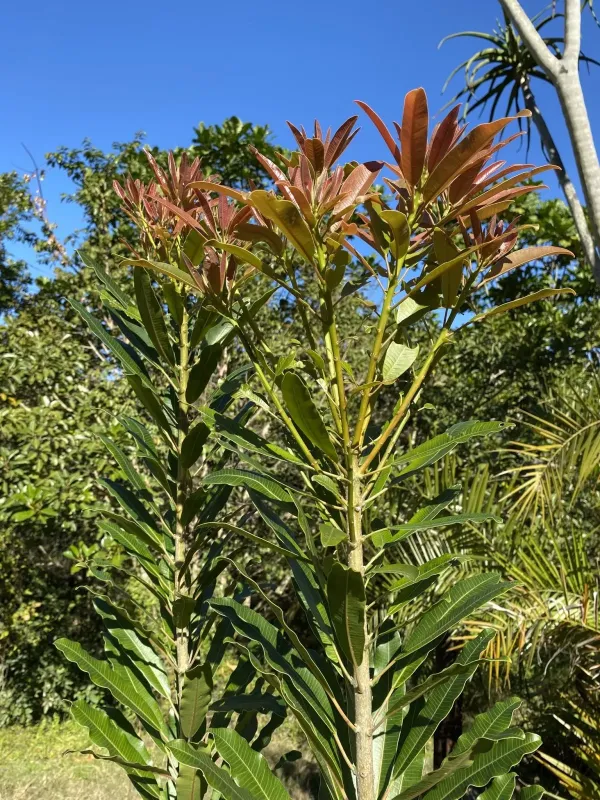
Protorhus longifolia, commonly known as the Red Beech or Northern Natal Mahogany, is a sturdy evergreen tree belonging to the Anacardiaceae family. It is recognized for its glossy, dark green, lance-shaped leaves and its significant role in the biodiversity of African coastal forests.
The natural habitat of this species is primarily in the eastern regions of South Africa, where it thrives in moist forests, riverine thickets, and wooded mountain slopes. Its distribution indicates a preference for mild subtropical climates with consistent moisture throughout the year.
Regarding soil requirements, Protorhus longifolia prefers deep, well-drained, fertile soil. While it shows some tolerance for different soil types, the most vigorous growth is achieved in loamy substrates rich in organic matter that allow for healthy root expansion.
The tree requires significant sunlight to maintain its dense foliage, although it can tolerate partial shade in its early stages of growth. Proper spacing is essential to ensure adequate air circulation, which prevents the development of moisture-related diseases in the canopy.
In terms of agricultural management, irrigation should be carefully balanced to prevent waterlogging, especially in juvenile plants. The tree is considered a versatile landscaping choice for tropical and subtropical zones, providing excellent shade and ornamental value due to its reddish young leaves and flowers.
Harvesting
The harvesting of Protorhus longifolia products is primarily focused on its fruits, which are small, edible drupes that turn a deep purplish-red color when fully mature. These fruits are typically collected by hand once they detach easily from the stem, indicating optimal ripeness.
Secondary harvesting involves the selective pruning of branches for timber production, which is carried out in sustainable cycles to ensure the longevity of the individual tree. The wood is prized for its fine grain and durability in various indoor applications.
Timing the harvest is critical; late summer and early autumn are the peak periods for collecting mature fruits in the tree's native environment. Careful handling is required to avoid damaging the skin of the fruit, which increases its shelf life during processing.
Post-harvest management of the fruits requires immediate cooling or drying to maintain nutritional quality and prevent spoilage. Processing methods often include simple cleaning and sorting based on size and color maturity for commercial distribution.
Sustainable harvesting practices ensure that a sufficient number of seeds remain for natural regeneration, supporting the ecological stability of the forest areas where the species is cultivated for agricultural or conservation purposes.