
Potentilla flagellaris
Potentilla flagellaris
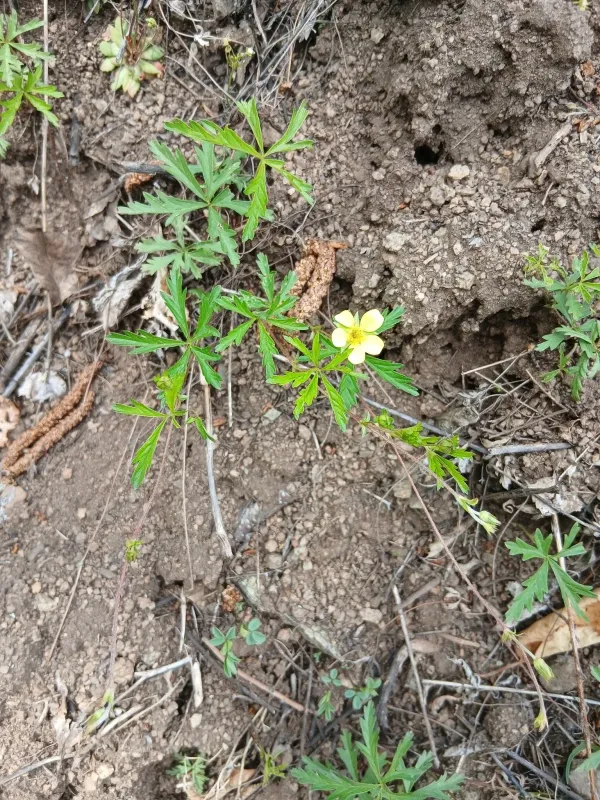
Description
Sowing dates
Potentilla flagellaris is a perennial herbaceous plant belonging to the Rosaceae family. It is characterized by its prostrate, creeping stems that root at the nodes, allowing the plant to spread effectively across open ground in its natural habitat.
In field conditions, propagation is achieved through seeds sown in early spring. The seeds are light-dependent for germination, requiring shallow placement in the soil to ensure optimal exposure to daylight while maintaining constant surface moisture.
For commercial cultivation, vegetative propagation is generally preferred. Dividing rooted runners provides a more reliable and faster method for establishing uniform crop cover. These segments should be planted with sufficient space to allow for expansion.
Planting density is typically determined by the goal of the cultivation, but 10–12 plants per square meter is often considered optimal. This spacing helps in suppressing common weeds while allowing the crop to establish a healthy canopy.
The establishment phase requires careful weed management during the first few weeks. Once the plant has established its root system and begun spreading its runners, it becomes highly competitive against invasive species.
Growing requirements
The crop thrives in well-drained, sandy loam soils with a slightly acidic to neutral pH. It is sensitive to waterlogging, as poor drainage significantly increases the risk of crown and root rot, which are detrimental to crop yield.
Potentilla flagellaris is highly heliophilic, meaning it requires full sun exposure for optimal growth and flowering. Shaded environments result in etiolated growth, weakened stems, and a reduction in the production of beneficial secondary metabolites.
The plant is highly frost-tolerant, originating from cold-temperate regions in Asia. It withstands winter temperatures effectively, provided there is adequate soil cover, making it a robust perennial for various climate zones.
Irrigation management is critical during the peak growing season, especially in regions with low precipitation. Regular moisture is necessary to sustain the growth of the creeping stolons and prevent early-season dormancy.
Fertilization should be handled with care, prioritizing balanced NPK formulations with lower nitrogen levels. Excessive nitrogen often leads to succulent growth, which may become more susceptible to fungal infections and pest attacks.
Main diseases and pests
Powdery mildew is the most prevalent fungal disease affecting this crop. It spreads rapidly in humid, poorly ventilated conditions, leading to white mycelial patches on the leaves and severely hindering the plant's photosynthetic capacity.
Aphids are the primary insect pests that colonize the young, tender shoots. By feeding on plant sap, they cause stunted growth and yellowing, and their feeding activity can also lead to the transmission of various plant viruses.
Root-knot nematodes can pose a threat, particularly if the crop is grown in soil that has previously hosted susceptible botanical species. Crop rotation and the use of clean, certified planting stock are essential preventive measures.
Fungal leaf spots can also be observed during prolonged wet weather. Improving air circulation through regular pruning or proper plant spacing is an effective cultural practice to mitigate the spread of these pathogens.
Integrated pest management (IPM) is recommended to control threats. This includes the selective use of fungicides and insecticidal soaps, applied during appropriate growth stages to minimize ecological impact and maintain plant health.