
Potentilla ancistrifolia
Potentilla ancistrifolia
Description
Growing requirements
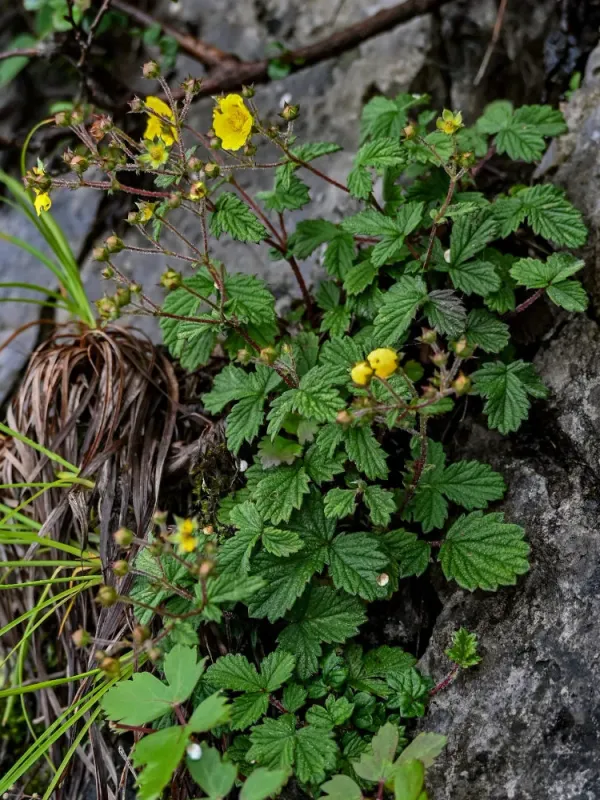
Potentilla ancistrifolia is a perennial herbaceous plant belonging to the Rosaceae family. Native to East Asia, it is commonly found in mountain landscapes and rocky outcrops across the Russian Far East, China, and Korea.
The plant is characterized by its adaptability to harsh environments. It typically grows in well-drained, stony, or sandy substrates where competition from other vegetation is minimal.
Regarding climatic requirements, the species is highly frost-tolerant and thrives in temperate regions with distinct seasonal changes. It requires full sun exposure for optimal vegetative growth and floral development.
Soil drainage is a critical factor for the successful cultivation of this species. Waterlogging of the root zone must be strictly avoided, as it is the most common cause of fungal issues and root rot.
General care involves minimal intervention. During the initial establishment phase, consistent moisture is necessary, but once the root system is well-developed, the plant becomes remarkably drought-tolerant.
Harvesting
The harvest of Potentilla ancistrifolia for medicinal or ornamental purposes is timed with the peak of the flowering phase. This timing ensures that the concentration of secondary metabolites in the foliage is maximized.
Harvesting involves the careful pruning of aerial parts. Using clean and sharp tools ensures a quick recovery of the plant, especially if the rootstock is left undisturbed for the following season.
Post-harvest processing requires immediate handling to prevent enzymatic degradation. Spreading the harvested material in thin layers is essential for uniform drying in controlled environments.
The drying process is conducted away from direct sunlight to preserve the chemical integrity of the active ingredients. Temperatures are maintained at moderate levels to ensure product quality.
Proper storage is essential to maintain the shelf life of the harvested material. Using moisture-proof containers in cool, dark storage areas is recommended for all long-term preservation efforts.