
Polycarpaea nivea
Polycarpaea nivea
Description
Growing requirements
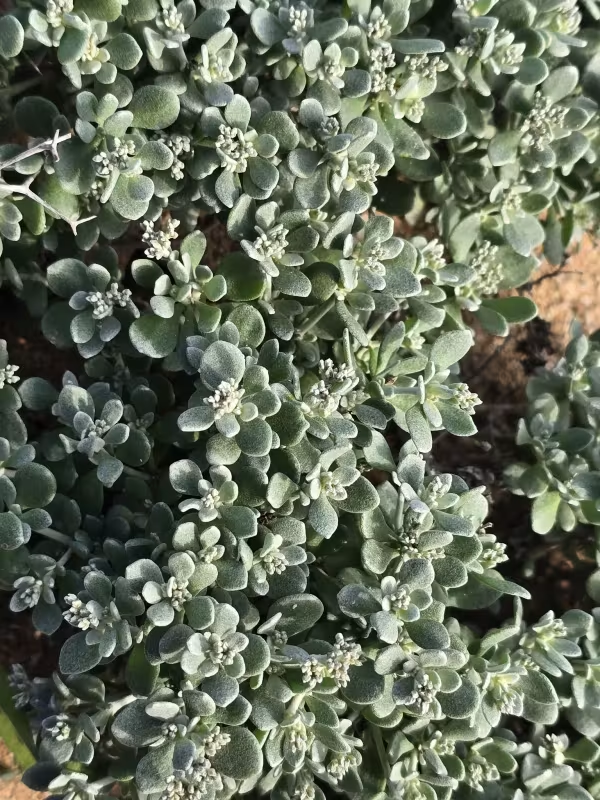
Polycarpaea nivea is an ornamental plant species belonging to the Caryophyllaceae family, known for its dense, silvery-white foliage that gives it a snowy appearance. This perennial shrublet is often utilized in arid-landscaping due to its unique aesthetics and resilience.
Originating from the Canary Islands and parts of North Africa, the plant is evolutionarily adapted to harsh, sun-drenched environments with minimal annual rainfall. Its biological structure, featuring fine hairs, protects the plant from excessive solar radiation and dehydration.
Soil requirements for Polycarpaea nivea are strictly centered on permeability. It thrives in poor, rocky, or sandy substrates with excellent drainage. Any accumulation of moisture in the root zone is detrimental, often leading to rapid root decay.
Regarding climatic needs, this plant requires high light intensity throughout its growth cycle. In regions with temperate climates, it is best suited for greenhouse conditions or container cultivation, where exposure to freezing temperatures can be completely avoided during winter months.
The agricultural management of this crop involves minimal maintenance. Irrigation should be restricted, applied only when the growing medium is completely dry. Fertilizer use should be limited, as high nitrogen levels cause undesirable succulent growth and loss of natural form.
Main diseases and pests
The primary threats to Polycarpaea nivea are related to fungal pathogens, specifically those causing root rot and damping-off. These issues are almost exclusively the result of waterlogged soil conditions and poor substrate drainage.
Pest pressure is mainly attributed to spider mites and mealybugs. These organisms thrive in the same warm, arid environments where the plant is grown, necessitating vigilant monitoring to prevent large-scale infestations.
Cultural control methods, such as maintaining optimal spacing between plants to improve airflow, are essential for disease prevention. Reducing humidity levels during cooler nights is a critical practice for long-term survival.
Chemical intervention should be used cautiously. Systemic insecticides are effective against sap-sucking pests but must be applied in accordance with manufacturer guidelines to avoid phytotoxicity to the delicate foliage.
In case of pathogen infection, immediate removal of affected plant parts is recommended. Maintaining high plant vigor through proper light exposure is the most effective natural defense against both pest and disease outbreaks.