
Pollichia campestris
Pollichia campestris
Description
Growing requirements
Pollichia campestris is a unique member of the Caryophyllaceae family, functioning as a monotypic genus known for its remarkable resilience to harsh environments. It is a subshrub that has developed specialized mechanisms to thrive in resource-poor conditions.
The plant originates from sub-Saharan Africa, where it naturally inhabits dry savannas and sandy terrains. From an agronomic perspective, it is valued for its hardiness in extreme heat and its potential to stabilize fragile soils against wind and water erosion.
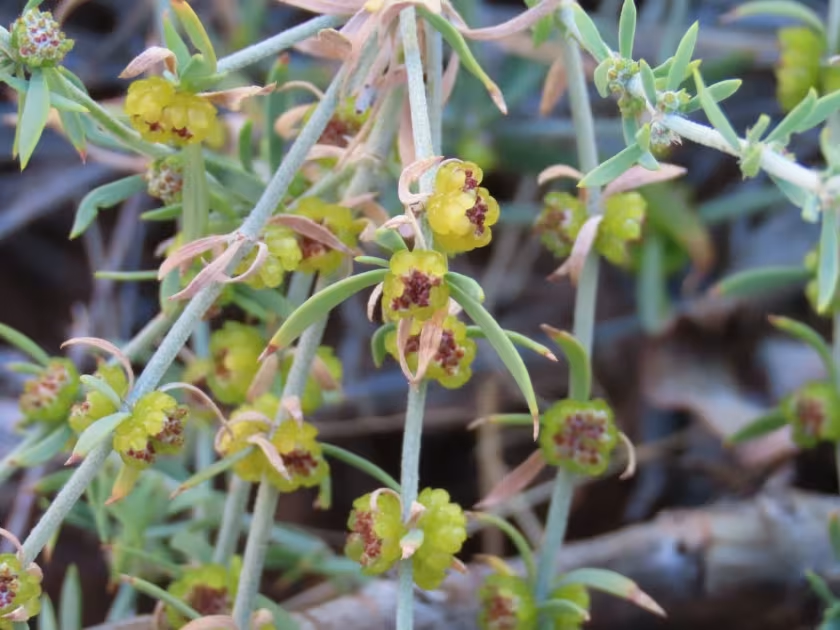
Botanically, the species is characterized by its small, simple leaves and a distinctive physiological trait where the inflorescence bracts become fleshy and succulent as the fruit matures. This structure aids in seed dispersal by attracting wildlife in arid environments.
Success in cultivating Pollichia campestris requires well-drained, porous soils. It is highly intolerant of waterlogging, which often leads to rapid decay of the root system; therefore, site selection is critical to ensuring plant survival during the establishment phase.
The species excels in full sun and requires minimal nutrient input, making it a sustainable choice for land rehabilitation projects in dry regions. While not a primary food crop, its ecological utility in desertification control is a subject of ongoing agricultural research.