
Pohlia nutans
Pohlia nutans
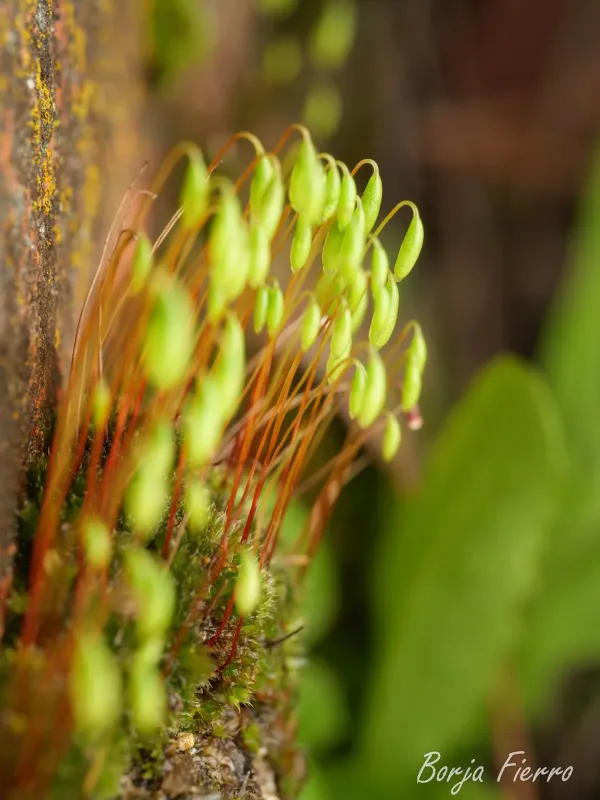
Description
Growing requirements
Pohlia nutans, commonly known as nodding thread-moss, is a representative of the Bryaceae family. While not an agricultural crop, it is a significant element of the bryophyte flora across global temperate and arctic regions.
The plant thrives in a variety of environments, ranging from coniferous and deciduous forests to peatlands. It exhibits a strong preference for acidic soils and decaying organic matter, demonstrating high ecological adaptability.
Its climatic requirements include moderate moisture levels, although the moss shows remarkable resilience to desiccation. It is frequently observed colonizing disturbed areas, acting as a pioneer species in post-fire or cleared forest sections.
The botanical structure consists of dense or loose turfs, often yellowish-green in appearance. Its most distinctive feature is the long, drooping seta (stalk) that supports the capsule, from which the name nodding thread-moss is derived.
Although it holds no traditional agricultural value, the moss acts as a biological indicator of soil health and humidity. It plays an essential part in carbon sequestration within boggy ecosystems and contributes to the structural integrity of the soil surface.
Main diseases and pests
Since Pohlia nutans is a wild-growing moss, it is not subjected to conventional crop diseases or pest infestations found in large-scale agriculture.
The primary threats to its existence are anthropogenic, specifically industrial forestry practices that disturb the delicate forest floor structure and alter humidity.
Habitat fragmentation remains a major concern, as the drying out of moist forest pockets leads to the localized extinction of moss populations.
Atmospheric pollution, particularly nitrogen deposition and acid rain, drastically alters the chemical balance of its substrate, hindering reproductive growth.
Encroachment of invasive plant species that alter soil nutrient levels can disrupt the specific niche requirements of this moss, leading to competition-based decline.