
Poacynum hendersonii
Poacynum hendersonii
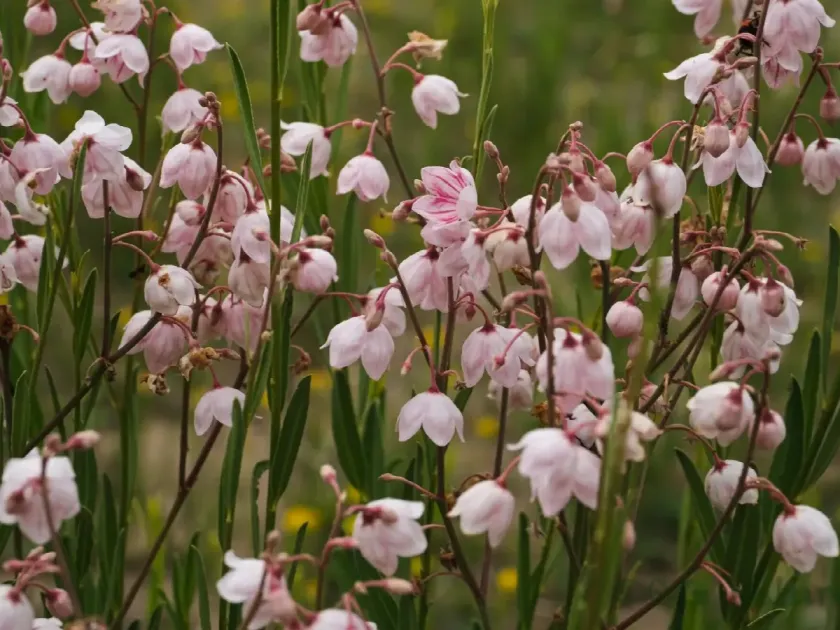
Description
Growing requirements
Poacynum hendersonii is a perennial herbaceous plant belonging to the Apocynaceae family. It is a highly specialized species that thrives in extreme arid environments, acting as an important stabilizer of sandy desert soils.
The native distribution area is primarily centered in the desert regions of Central Asia, specifically the Tarim Basin. Due to its evolutionary history, the plant has developed remarkable mechanisms for salt tolerance and drought resistance.
Successful cultivation requires intense sunlight and well-drained soil conditions. The plant is perfectly adapted to alkaline or saline soils, where it demonstrates aggressive growth patterns, often outperforming other vegetation types under harsh desert conditions.
From an agronomical perspective, the plant requires minimal maintenance once established. Its deep-reaching root system allows it to tap into groundwater, reducing the need for artificial irrigation even in arid zones with low annual precipitation levels.
The plant exhibits high thermal adaptability, being capable of surviving significant seasonal temperature fluctuations. It remains dormant during the harshest periods and resumes active growth as soon as climatic conditions become favorable.
Harvesting
Poacynum hendersonii is primarily harvested for its high-quality bast fibers, which are valued for their tensile strength and resistance to environmental degradation. These fibers are traditionally used for creating cordage and textiles.
The harvest period occurs when the stems reach full maturity, characterized by high cellulose content. In agricultural practice, mechanized harvesting is employed to ensure efficiency and uniformity of the raw material collected.
Post-harvest processing involves drying and retting, which are essential steps to separate the useful fiber bundles from the woody parts of the stem. Proper execution of these processes determines the final grade of the fiber.
Industrial applications extend beyond textiles to include the production of high-strength paper and specialized biocomposite materials. The durability of the fibers makes them a sustainable choice for industrial manufacturing.
Beyond its economic value, the crop serves an ecological function by preventing soil erosion in desertified territories. Its cultivation represents a viable strategy for productive land reclamation in regions facing severe soil degradation.