
Pleuropogon refractus
Pleuropogon refractus
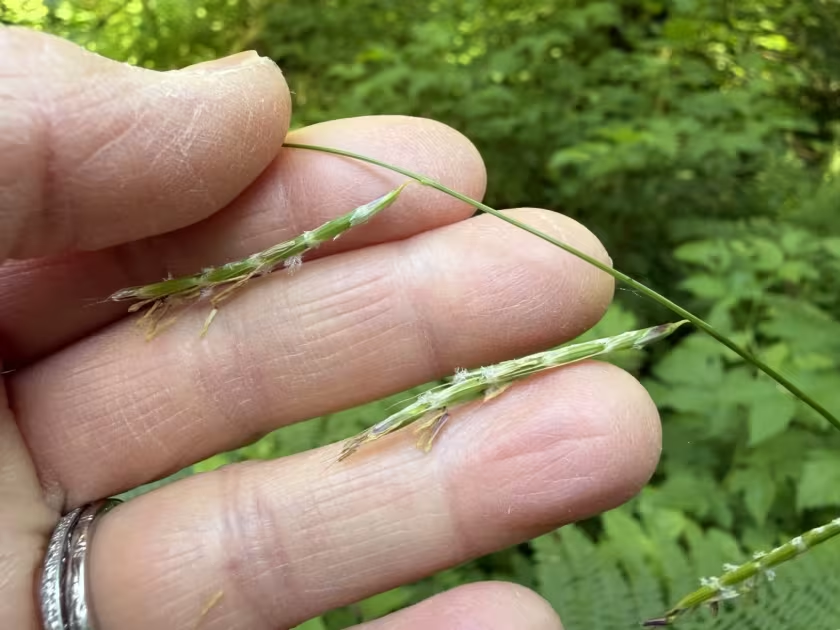
Description
Sowing dates
Pleuropogon refractus, commonly known as nodding semaphore grass, is a perennial grass species belonging to the Poaceae family. It is naturally adapted to moist environments and can be integrated into agricultural systems, particularly in regions with high soil moisture levels.
Sowing should ideally take place in early spring when soil temperatures allow for active germination. Successful stand establishment depends heavily on maintaining consistent soil moisture levels throughout the initial growth stages, as the seeds are sensitive to desiccation.
The seeding rate must be optimized to account for the species' tillering capacity and the desired plant density. Preparing a clean, weed-free seedbed is essential to provide young seedlings with sufficient space and nutrients for robust early development.
Drilling the seeds in rows with appropriate spacing is the recommended method to ensure uniform distribution. This approach facilitates better management and allows for more efficient nutrient uptake and light interception as the grass matures.
In certain climates, dormant seeding during the late autumn can be considered to allow for natural stratification of the seeds. However, care must be taken to prevent seed displacement caused by snowmelt or heavy runoff during the winter months.
##requirements##This grass species has a strict preference for wet, marshy, or swampy habitats. It is uniquely adapted to thrive in areas with high water tables, making it an excellent choice for marginal lands that are often too wet for traditional cereal crops.
Pleuropogon refractus performs best in soils rich in organic matter, such as peat-based substrates or nutrient-dense alluvial soils. It exhibits a high tolerance for slightly acidic conditions, allowing it to colonize environments where other grasses might fail.
Climate requirements include a stable, temperate growing season with reliable moisture availability. It does not tolerate prolonged drought, which can significantly inhibit its growth and reduce the overall biomass production potential.
Light exposure is beneficial for optimal photosynthesis; however, the plant maintains a degree of resilience in semi-shaded conditions. The ideal temperature range for its metabolic processes typically falls between 15 and 22 degrees Celsius.
Field management requires careful monitoring of the hydro-regime to prevent the soil from drying out excessively. Judicious nitrogen fertilization can significantly enhance the vegetative yield and promote vigorous regrowth after harvests.
##yield##The agricultural value of Pleuropogon refractus lies primarily in its biomass production for livestock forage. It offers a viable source of nutrients in wetland areas where conventional forage grasses cannot be cultivated effectively.
The total yield potential depends on the frequency of harvest and the nutritional status of the soil. Under well-managed conditions with adequate water, the grass can produce multiple cuts during the growing season.
The chemical composition of the forage contains a balanced ratio of fiber and protein, making it suitable for grazing or hay production. Harvesting at the peak of the heading phase is critical to capturing the highest possible nutrient density.
Beyond forage, this grass plays an important role in phytoremediation and soil stabilization. Its extensive root system helps to bind the soil particles together, preventing erosion in riparian zones and flood-prone agricultural fields.
Ongoing research into breeding and selection focuses on increasing the leaf-to-stem ratio. Improving this trait will further enhance the feed quality and the overall economic output of the crop for farmers.
##threats##The most common threats to this crop include various fungal pathogens that thrive in humid environments. Rust diseases and leaf spot fungi can impact leaf health and reduce the overall photosynthetic capacity of the stand.
Insect pests that target stems or root structures can cause localized damage to the field. Implementing integrated pest management strategies is the most effective approach for maintaining healthy populations and protecting the yield.
Powdery mildew can become a concern in high-density stands during periods of fluctuating humidity. Maintaining proper spacing and ensuring adequate airflow are key preventative measures to keep infection rates low.
Poor drainage or excessive soil compaction can lead to stress, weakening the plant's natural defense mechanisms. These factors often predispose the grass to secondary infections and limit its ability to recover after cutting.
Regular field scouting is essential to identify early signs of stress or pest outbreaks. Timely intervention, using environmentally responsible methods, is necessary to sustain long-term crop productivity.
##harvest##The optimal harvest window is during the heading phase, when the plant has achieved peak nutritional value. Cutting at this time ensures that the forage is palatable and highly digestible for livestock consumption.
Using mechanical harvesters in wet soil conditions requires specialized equipment to prevent significant damage to the root mat. The cutting height should be carefully calibrated to encourage rapid regrowth of the vegetation.
Converting the fresh mass into high-quality hay requires rapid drying techniques. Given the damp nature of the environment, mechanical ventilation systems are often necessary to prevent spoilage and fungal growth during storage.
Seed harvesting should be performed during the wax maturity stage to prevent shattering and excessive seed loss in the field. Careful collection ensures a high-quality supply of seeds for subsequent planting seasons.
Post-harvest conditioning involves proper drying and moisture management to achieve stable storage levels. This preserves the structural and nutritional integrity of the crop for its intended agricultural use.