
Platygyna hexandra
Platygyna hexandra
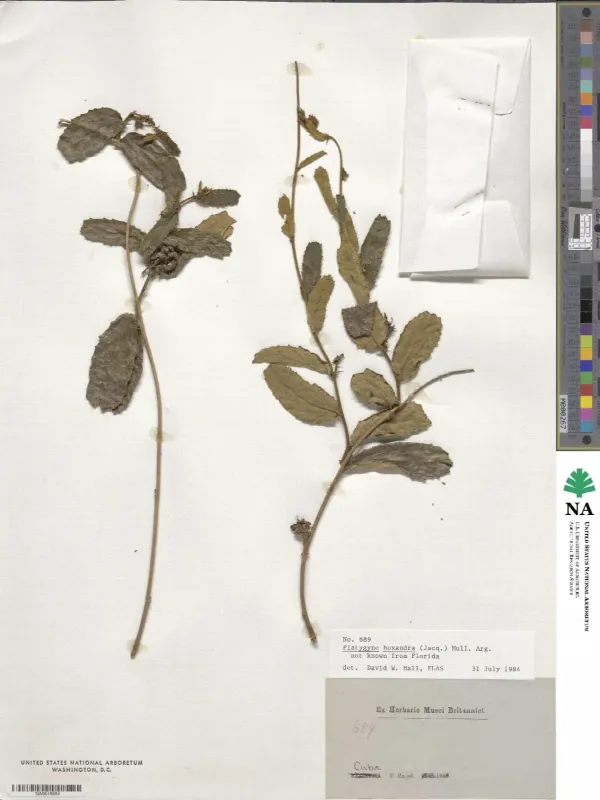
Description
Growing requirements
Platygyna hexandra is a notable member of the Euphorbiaceae family, primarily native to the island of Cuba. As a perennial woody plant, it thrives in specific tropical niches, showcasing the unique evolutionary adaptations typical of Caribbean island flora within its genus.
The climatic requirements for this species are strict, necessitating a consistently warm environment without cold exposure. It is highly sensitive to thermal stress, which dictates that its cultivation is primarily successful only in controlled greenhouse environments or natural tropical habitats with stable temperatures.
Soil management for Platygyna hexandra focuses on providing porous, well-drained growing media. Excess soil moisture must be strictly avoided to prevent root rot, as the species has evolved in settings where rapid water drainage is facilitated by the geological substrate of its native range.
Botanically, the plant is characterized by its distinct floral morphology, where the name itself, hexandra, refers to the six stamens present in the flowers. This structural feature is a key identification marker for the species, distinguishing it from other closely related members of the Euphorbiaceae family.
Regarding its economic utility, Platygyna hexandra is currently classified as a specialty botanical specimen rather than a broad-acre agricultural crop. Its value is predominantly centered on scientific research, biodiversity conservation, and the study of phytochemical properties inherent in the genus Platygyna for potential pharmaceutical applications.