
Plagiochila asplenioides
Plagiochila asplenioides
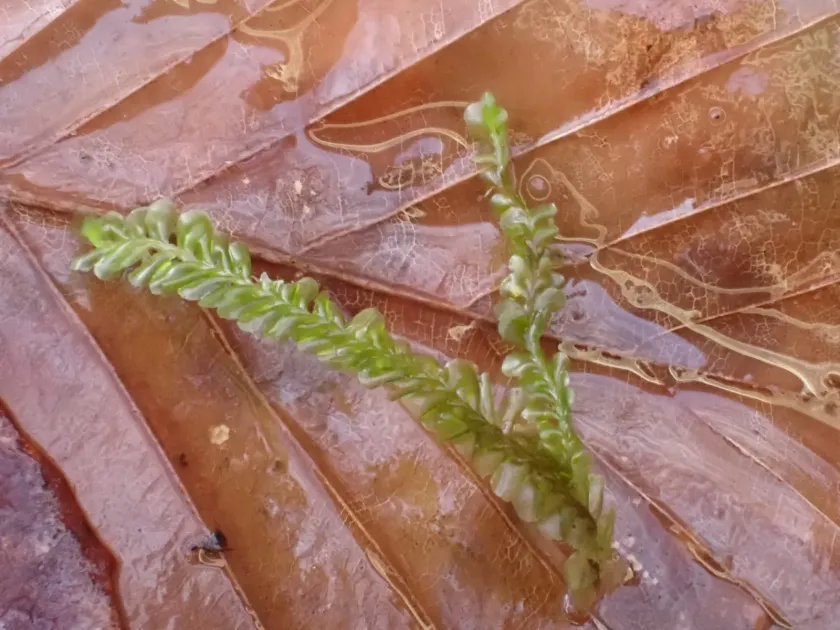
Description
Growing requirements
Plagiochila asplenioides is a leafy liverwort belonging to the Plagiochilaceae family. While not a conventional agricultural crop, it is a significant organism in forest ecology, acting as a crucial component of the bryophyte community in moist, shaded environments.
The species is widely distributed across the temperate regions of the Northern Hemisphere. It typically thrives in humid environments such as forest floors, shaded stream banks, and damp rock surfaces, where the microclimate remains stable throughout the year.
Botanically, it is recognized by its robust, leafy shoots that can grow up to 10 cm in length. The leaves are characteristically asymmetric and often possess dentate margins, which provide a high surface area for moisture absorption from the atmosphere.
Environmental requirements include a consistently high relative humidity and protected conditions away from direct sunlight. It cannot survive in arid climates or areas subjected to frequent desiccation, making it a sensitive indicator of forest health.
In terms of human use, the plant does not hold agricultural or economic value in terms of production. However, it serves as a valuable biological indicator for researchers assessing the long-term moisture status and general stability of woodland habitats.
Main diseases and pests
The primary threat to Plagiochila asplenioides is the destruction of its habitat through deforestation and land conversion. Loss of forest canopy directly results in the drying of the forest floor, which is lethal to this bryophyte.
Climatic warming and changes in precipitation patterns pose a significant risk, as the species depends entirely on reliable atmospheric moisture. Extreme temperature fluctuations can lead to the rapid decline of localized populations.
Pollution, including acidic deposition and industrial runoff, affects the physiological well-being of the plant. Because liverworts absorb nutrients and moisture directly through their leaves, they are highly susceptible to chemical toxicity.
Mechanical disturbances such as soil compaction, hiking traffic, and large-scale agricultural activity near forest edges are also major threats to its survival. The plant lacks the ability to quickly recolonize disturbed, dry environments.
Finally, competition for space with faster-growing invasive plant species can crowd out the slower-growing liverworts, leading to a loss of biological diversity within its native range.