
Agarista populifolia
Agarista populifolia (Lam.) Judd
Description
Growing requirements
Agarista populifolia, commonly known as Florida hobblebush, is an evergreen shrub belonging to the Ericaceae family. Its native range is concentrated in the southeastern United States, where it thrives in moist, shaded woodland habitats and riparian corridors.
The plant has specific soil requirements, demanding acidic conditions to thrive. A well-draining, organic-rich soil medium is crucial for its development, as the roots are highly sensitive to both waterlogging and alkaline pH levels.
Cultivation should prioritize areas with partial shade. While the shrub can tolerate some dappled light, direct exposure to intense sunlight often leads to leaf scorch and dehydration, which can significantly damage its evergreen foliage.
Climate adaptability is limited to regions with mild temperatures. As a subtropical to warm-temperate plant, it requires protection from hard frosts and wind, making it an excellent candidate for sheltered garden spots in suitable hardiness zones.
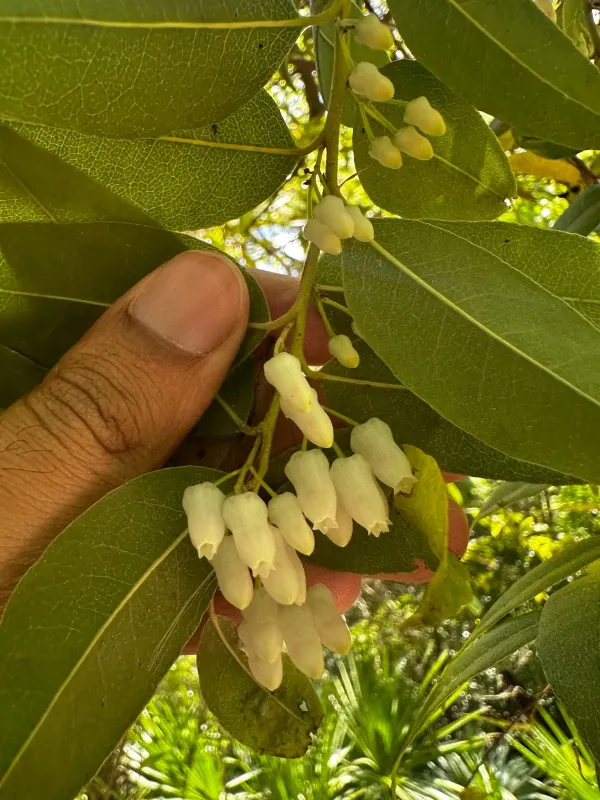
Morphologically, the plant is distinguished by its arching stems and glossy, lance-shaped leaves reminiscent of poplar foliage. The inflorescences consist of fragrant, white, pendulous flowers that appear in the spring, adding significant ornamental value.
Main diseases and pests
The primary threats to the health of Agarista populifolia involve fungal pathogens triggered by poor air circulation and excessive moisture. Root rot is a common issue when the drainage system of the planting site is inadequate.
Insect pests, including scale insects and mites, may occasionally infest the plants, particularly during periods of low humidity or environmental stress. Regular inspection of the undersides of the leaves is advised for early detection.
Nutrient deficiencies, particularly iron chlorosis, occur when the soil pH deviates from the acidic range required for proper nutrient uptake. This condition manifests as yellowing leaves while the veins remain green.
Cultural management should focus on precise irrigation and the application of pine bark or leaf mulch to preserve soil acidity and moisture levels. Such practices help strengthen the plant's natural resistance to diseases.
Management of outbreaks involves the use of targeted treatments. It is essential to avoid heavy-handed pesticide applications, as members of the Ericaceae family are often sensitive to certain chemical additives.