
Pinzona coriacea
Pinzona coriacea
Description
Growing requirements
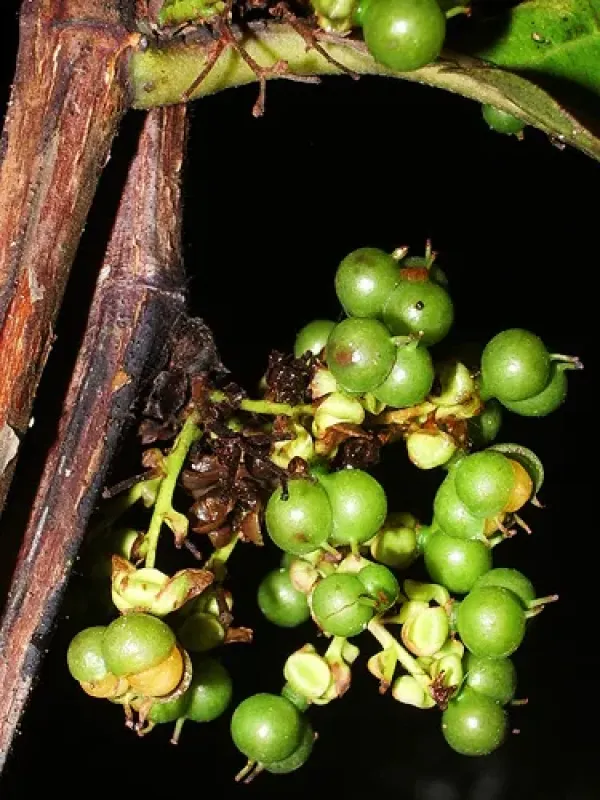
Pinzona coriacea is a woody liana species belonging to the Dilleniaceae family. Native to the tropical rainforests of Central and South America, it thrives in complex forest ecosystems where it utilizes larger trees for support.
The plant requires deep, well-draining soils that are rich in organic matter. A balanced substrate with high moisture retention but excellent aeration is essential to prevent the root suffocation that occurs in compacted soils.
Climate requirements include high ambient temperatures, ideally maintained between 22°C and 28°C. The species is highly sensitive to cold spells and must be protected from any temperature drops below 15°C.
High relative humidity is crucial for the healthy development of its characteristic coriaceous leaves. In cultivation settings, misting systems or greenhouse humidifiers are often necessary to mimic the natural rainforest environment.
While the plant is sun-tolerant, it grows best in dappled light conditions. Protection from harsh midday direct sunlight is recommended to maintain the integrity of the foliage and prevent transpiration stress.
Harvesting
The economic utilization of Pinzona coriacea is primarily niche, involving traditional local use of its fruit and plant parts. Scientific research continues to explore its chemical potential for pharmaceutical applications.
Harvesting is a delicate manual process. Due to the climbing nature of the plant, collectors must carefully navigate the lianas to retrieve fruits without damaging the primary growth stems.
Timing the harvest depends on the physiological maturity of the fruit, often indicated by subtle shifts in texture and pigment, which requires a trained eye to recognize in field conditions.
Post-harvest handling must be swift, as tropical environmental conditions facilitate rapid degradation of harvested biomass. Drying in well-ventilated areas is the preferred method for stabilizing the material.
Storage requires cool, dry conditions to prevent fungal growth. Ensuring that the harvested parts remain free from excessive humidity is the biggest challenge during the post-harvest chain.